Paris Run Clubs: What They Fix, and What They Do Not
Paris has never had this many run clubs, and most of them are under five years old. What they genuinely give you, how to choose one, and why the route itself stays their blind spot.
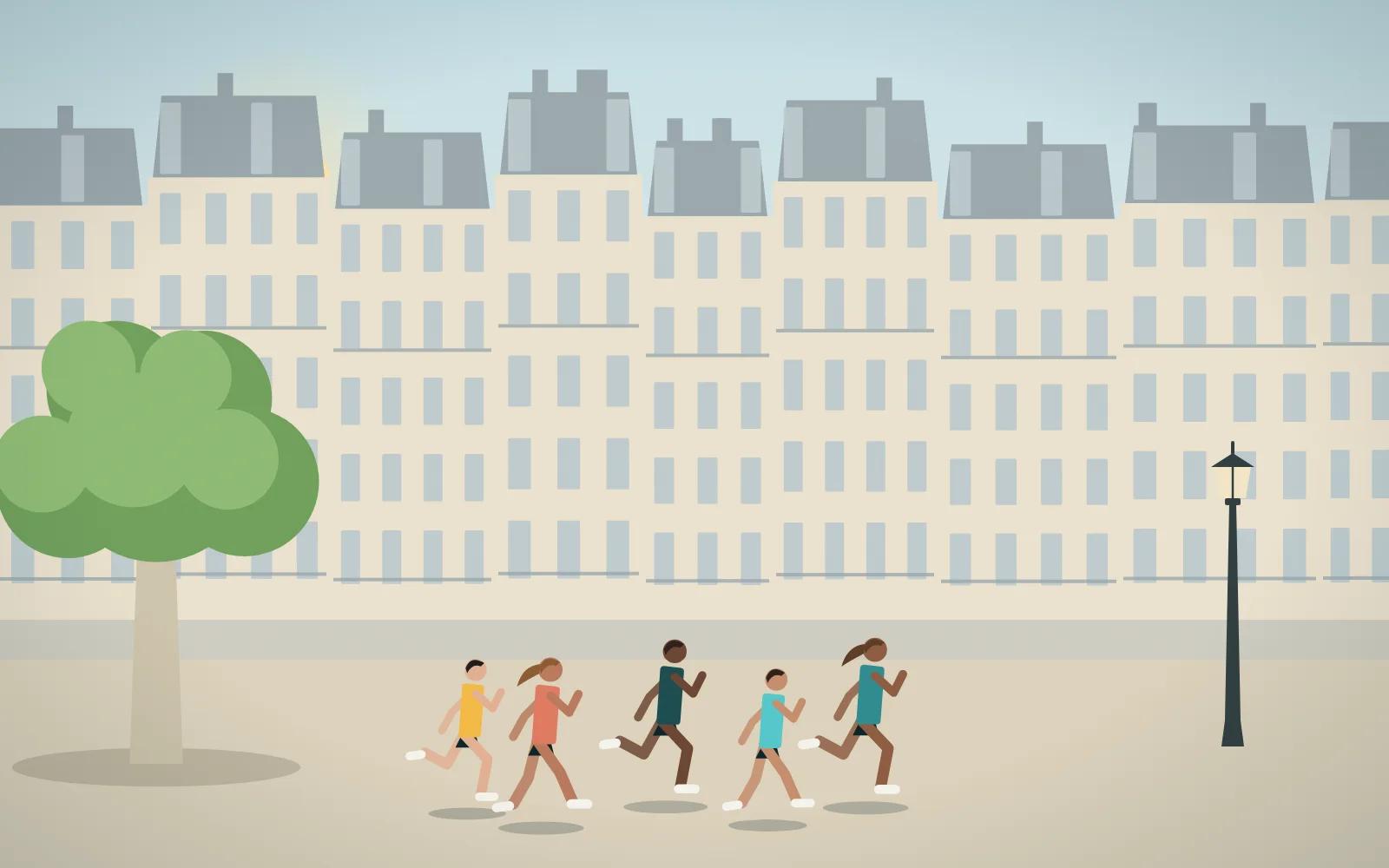
Paris has more running clubs than at any point in its history, and most of them are less than five years old. Paname Run Club, founded in 2022, claims more than 4,500 runners. Paris Running Club has been going since 2008. Between those two sit dozens of smaller collectives, most of them born from an Instagram account and a meeting point outside a café. The boom is real, it is specifically Parisian, and it has already changed how people run here.
It has also changed what planning a week means. For twenty years a Paris runner decided everything alone: the times, the paces, the routes. Now a good part of that week gets decided inside a group of eighty people leaving at 7:15 pm from a spot somebody else chose. For consistency, that is excellent news. For the quality of the routes, it is more debatable, and nobody says so.
What a club genuinely fixes
The first benefit is not training, it is turning up. A session you have committed to in front of other people happens, even in November rain, even after a day that ran too long. Consistency explains more amateur progress than session content ever will, and a club solves it without you having to think about it.
The second is pace. Running alone in Paris pushes you to run too fast: you start on adrenaline, you chase the lights, and you finish an easy run at a pace that was never easy. Serious clubs split the pack into announced bands, like the Cool, Mid and Hard groups at Paris Running Club or the no-drop pace groups at Paname, and they hold you to a rhythm you would not have held on your own.
The third is the city itself. At 7 pm in January, on a badly lit quay, running in a group of eighty is nothing like running alone. Clubs open up time slots and neighbourhoods that plenty of runners, women especially, avoid solo.
Three families of club
The social clubs. The meet-up is the product. Paname Run Club built its reputation on Mardi Disco, an 8 to 10 km run with a DJ, and on relaxed weekend Coffee Runs that finish at a café. You come for the room, and the training is a side effect.
The brand and performance clubs. adidas Runners Paris works like an athletics club without the licence: chapters split by area, sessions on Tuesday at 7 pm and on weekend mornings at 10, plus track work, strength, long runs and yoga. If you are building towards a race, this is the family you want, not the first one.
The themed clubs. Culture Run Paris does narrated runs through passages and neighbourhoods most people never see. The Food Runners, the Running Flan Club, the Matcha Running Club and the Cookie Run Club are open about the run being a pretext for what follows. Marais Running Club runs without watches. And Front Runners de Paris, the LGBTQIA+ club open to every level, was here long before the trend was.
The useful question when you choose is not what level you are. It is which session you would genuinely be annoyed to miss. If the honest answer is the coffee afterwards, join a social club and own it. You will actually go.
What a club cannot do for you
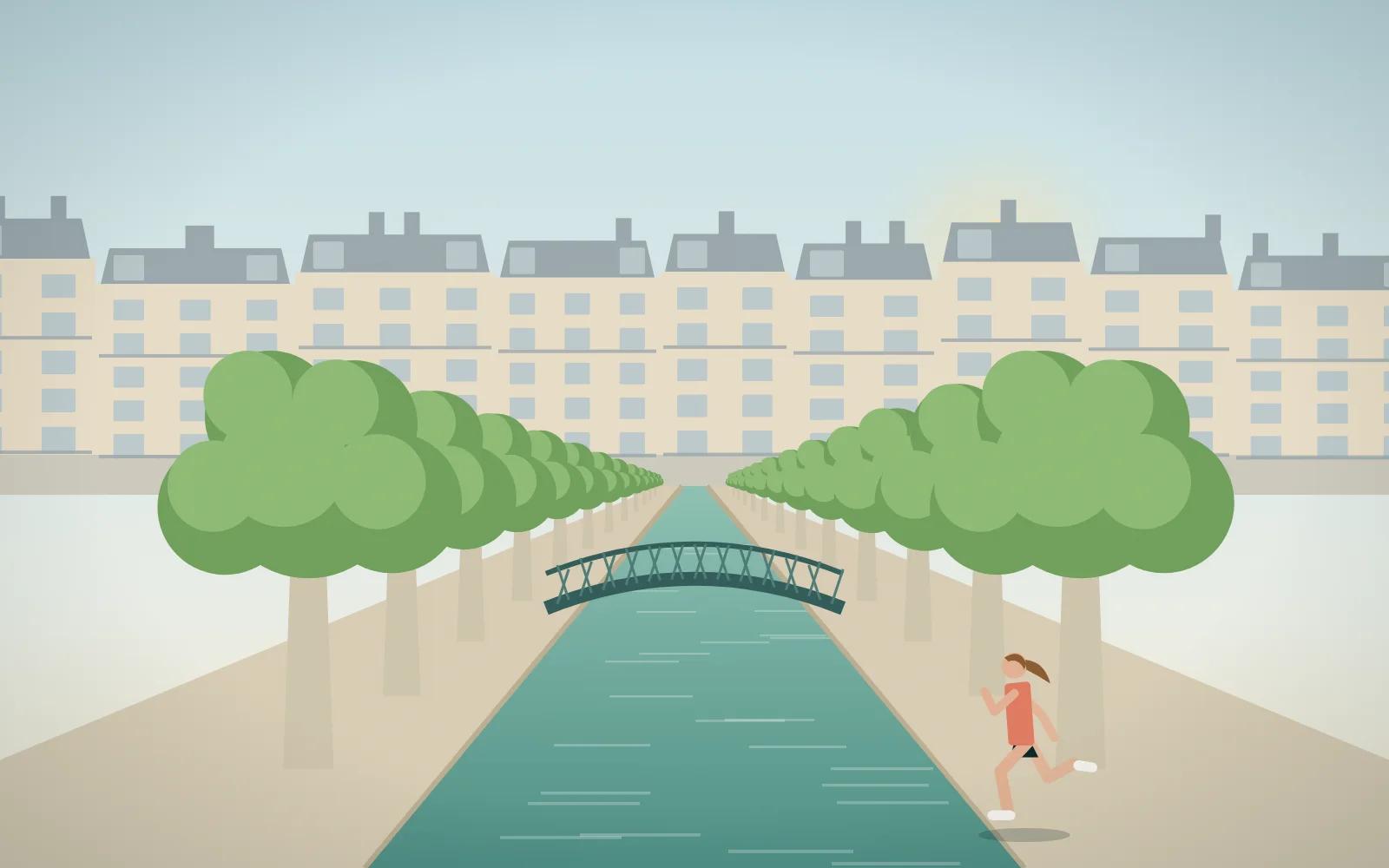
The route. This is the blind spot of the whole boom, and it is mechanical rather than anyone's fault. A club route is a logistics compromise before it is a route: you need a meeting point on the Métro, a venue that can hold eighty people, a start and a finish in the same place, streets wide enough for a pack, and few enough crossings that the group can regroup. Those constraints produce boulevards and quays. They do not produce the best running streets in Paris, which tend to be narrow, quiet, tree-lined and completely unusable by eighty people at once.
Volume is the other gap. A club gives you one or two runs a week. A half or marathon plan asks for four or five. So the club covers the visible part of your training and leaves you all the rest: the Sunday long run, the Thursday recovery jog, the thirty minutes squeezed in before work.
Then there is the slot. Tuesday at 7 pm does not work for everyone. If you run at 7 in the morning, no club in Paris will keep you company more than once a week.
The other four days
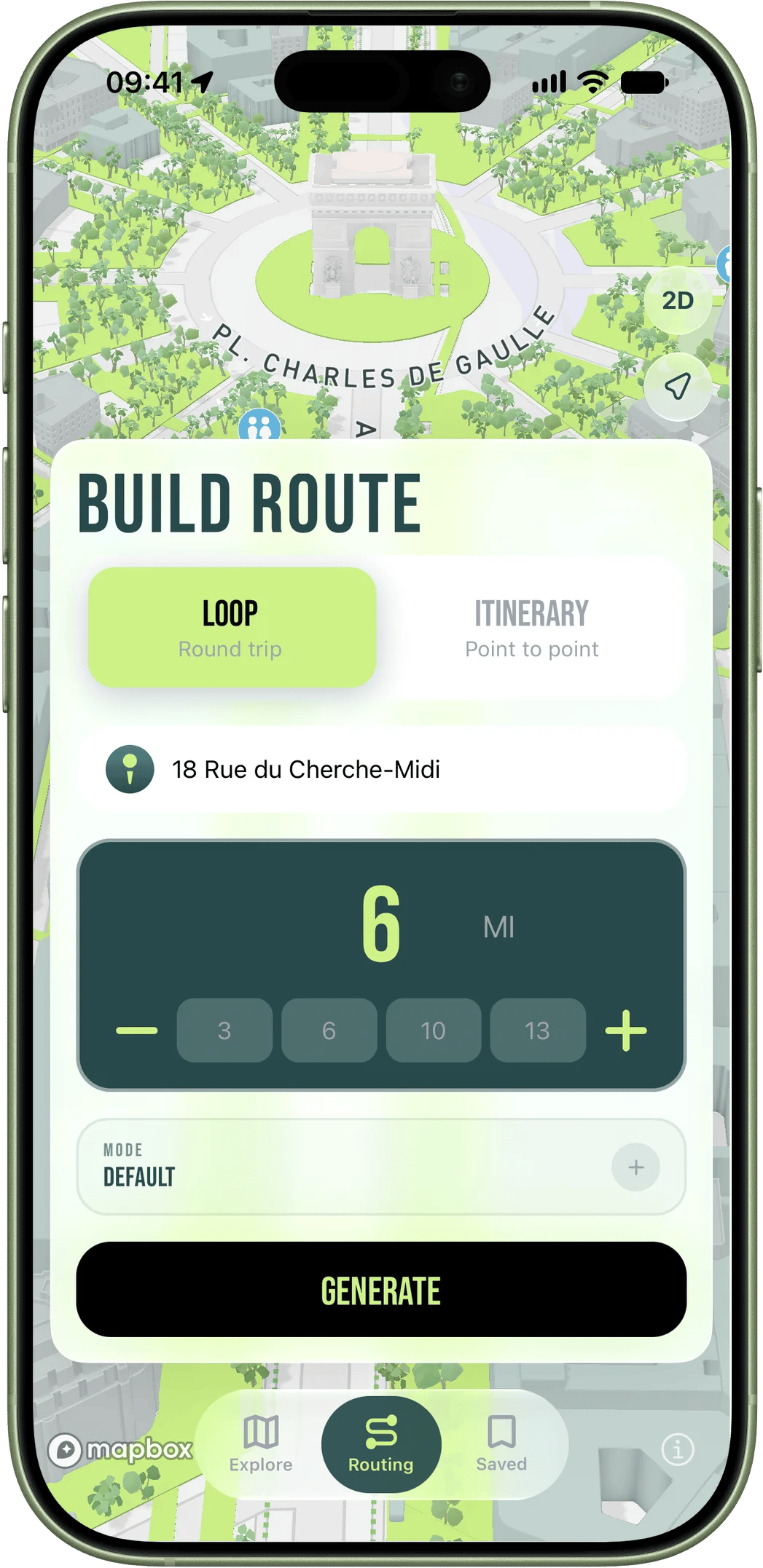
That gap is exactly what RunninParis fills. The club gives you an appointment, not the four runs around it. Drop your address, pick a distance, and the app builds several routes scored on what actually matters here: tree cover, sidewalk width, pedestrian zones, parks and crossings. In thirty seconds you get the thing a club structurally cannot produce, a route optimised for exactly one runner, you.
Two habits work particularly well. The first is to use the club's own meeting point as your starting address and ask for the same distance on a different day. You will see straight away that the solo version goes elsewhere, and usually goes better. The second is to save three routes at three distances, 5, 10 and 18 km, and export them as GPX to your watch. The Thursday evening question stops being where to run and becomes which one.
The club and the app are not competing for anything. One solves getting out of the door, the other solves where to go. The Paris week that works uses both.