

Where to Run in Paris: A Neighbourhood-by-Neighbourhood Guide
Every arrondissement has a good run hiding in it — if you know where to look. A practical map of where to run in Paris, wherever you are staying or living.
Ask ten Parisians where to run and you will get ten answers, because the honest one is "it depends where you start." Paris is small — you can cross it on foot in two hours — but it is also one of the densest cities in Europe, and that density means the quality of a run changes block by block. A great route in the 7th is a frustrating one in the 2nd. The point of this guide is to give you the best option from wherever you happen to be, whether you live here or you are in town for four days with a hotel near the Louvre. We have organised it the way the city actually divides up for a runner: the river and centre, the east and the canals, and the west and south with their woods.
The centre and the river — where almost everyone should start
If you are staying anywhere near the middle of Paris, the Seine is your answer and it is not close. The lower quays — the Berges de Seine on the Left Bank between the Musée d'Orsay and the Pont de l'Alma, and the Parc Rives de Seine on the Right Bank from the Tuileries to the Bastille — are pedestrianised, flat, and car-free, and they put the most photographed monuments in the world on either side of you. From a central hotel you can string together a 5-to-8 kilometre loop crossing at two bridges without ever waiting at a traffic light for more than a few seconds. The Jardin du Luxembourg in the 6th and the Tuileries in the 1st give you raked-gravel loops for when you want to run circles rather than lines, though both close at night and open late, so check the gate times before an early start.
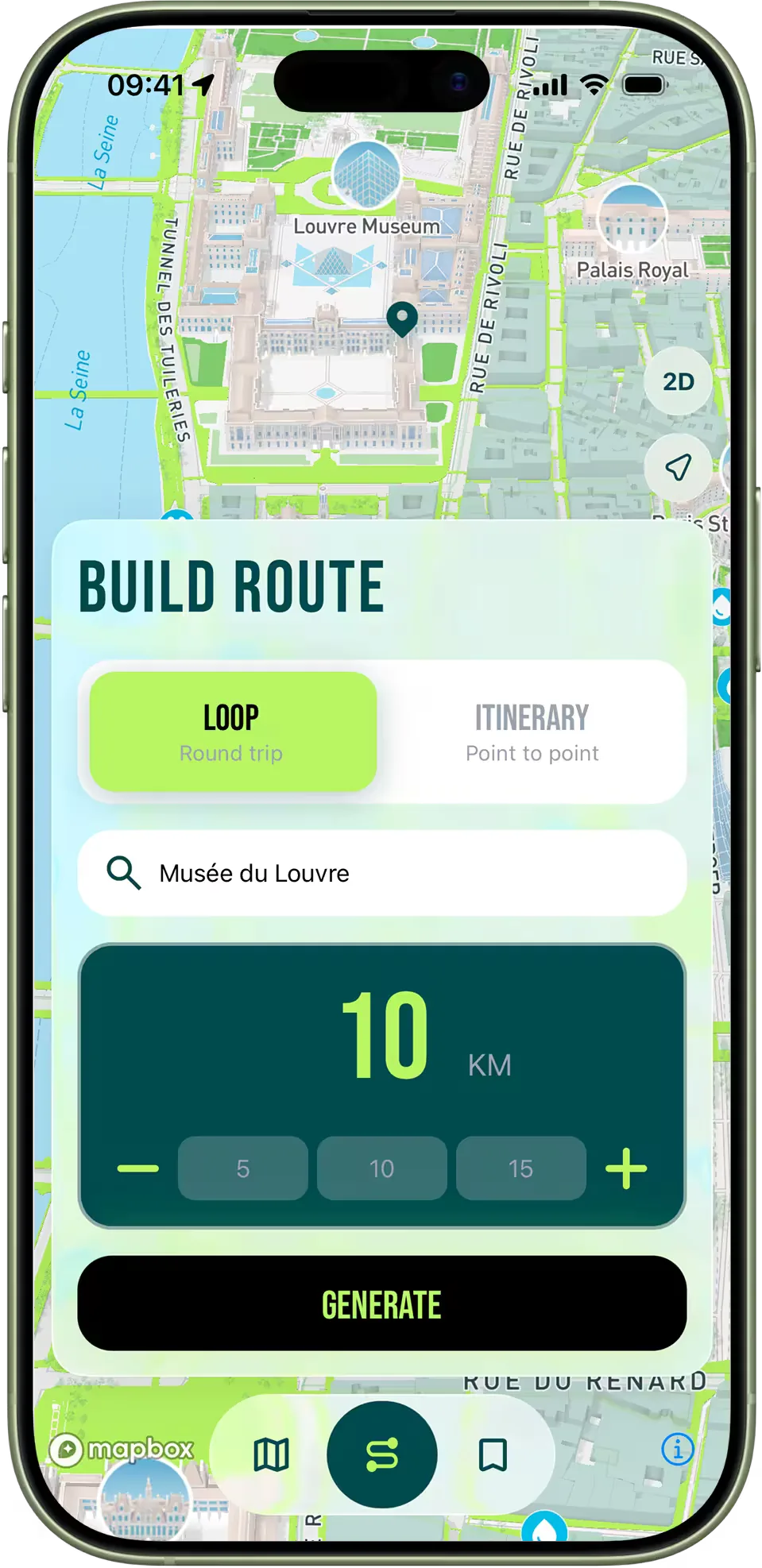
The catch in the centre is everything that is not the river. The 1st, 2nd, 8th and 9th are a grid of narrow pavements, delivery vans and tourist crowds, and running them at street level is genuinely unpleasant. This is exactly the situation our scoring engine was built for: two routes of the same distance from the same door can score completely differently because one of them finds the river and the pedestrian passages and the other grinds along the rue de Rivoli. Set your address, set your distance, and let the first suggested route show you the way down to the quays — it is almost never the route you would have guessed from the map.
The east, the north and the canals — the runner's quarter
The northeast of Paris — the 10th, 11th, 19th and 20th — is where the city's running culture actually lives, and it is built around water and elevation. The Canal Saint-Martin and the Canal de l'Ourcq give you a flat, lit, largely car-free corridor running from the Bastille all the way out past the Bassin de la Villette toward Pantin, easily ten kilometres one way if you want it. Above the canals, the Parc des Buttes-Chaumont is the only honest hill venue inside the city, with a perimeter that pulls real vertical and a surface soft enough to take repeats. From a flat in the 11th or 19th you are rarely more than a few minutes from one or the other.
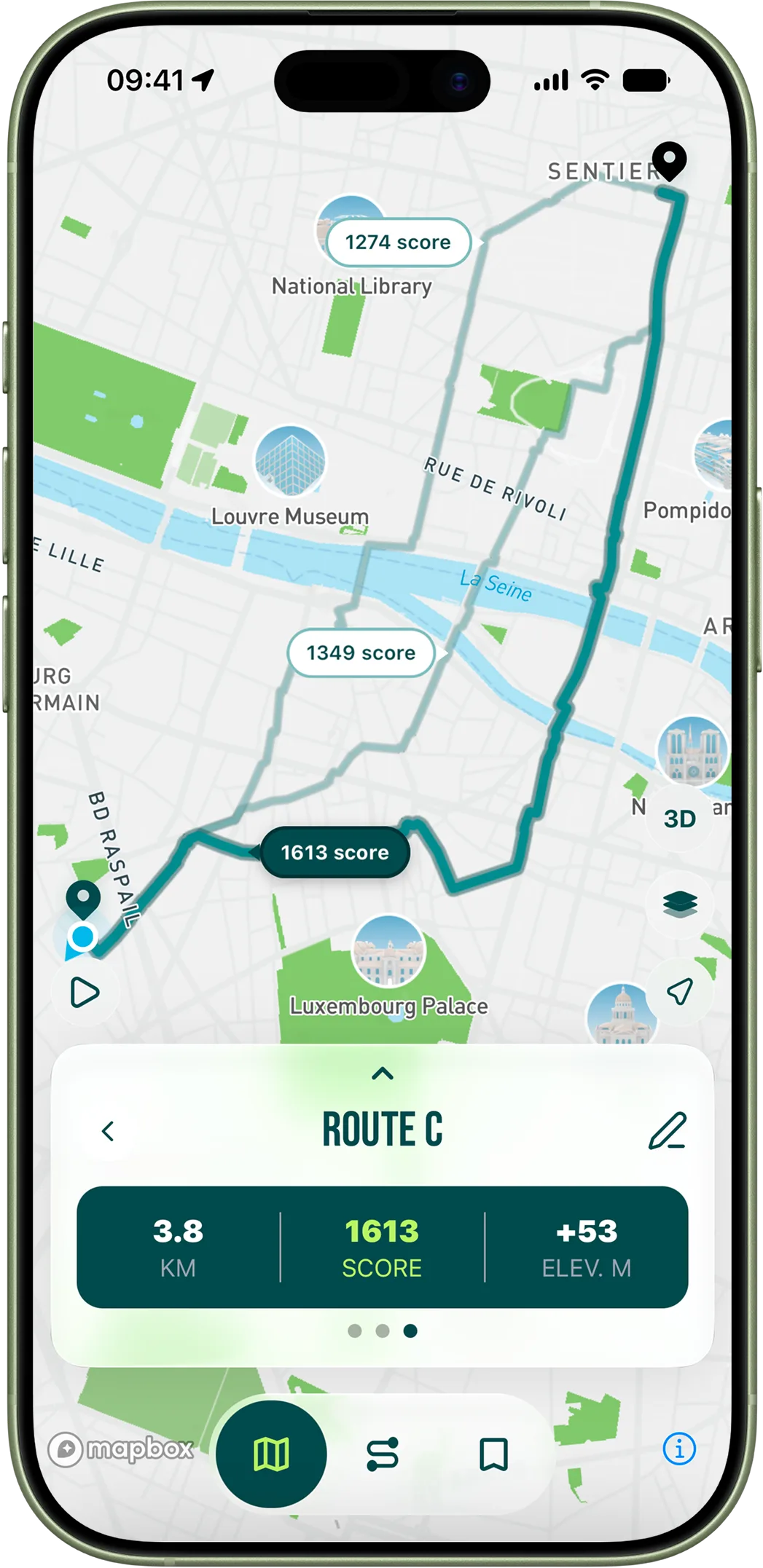
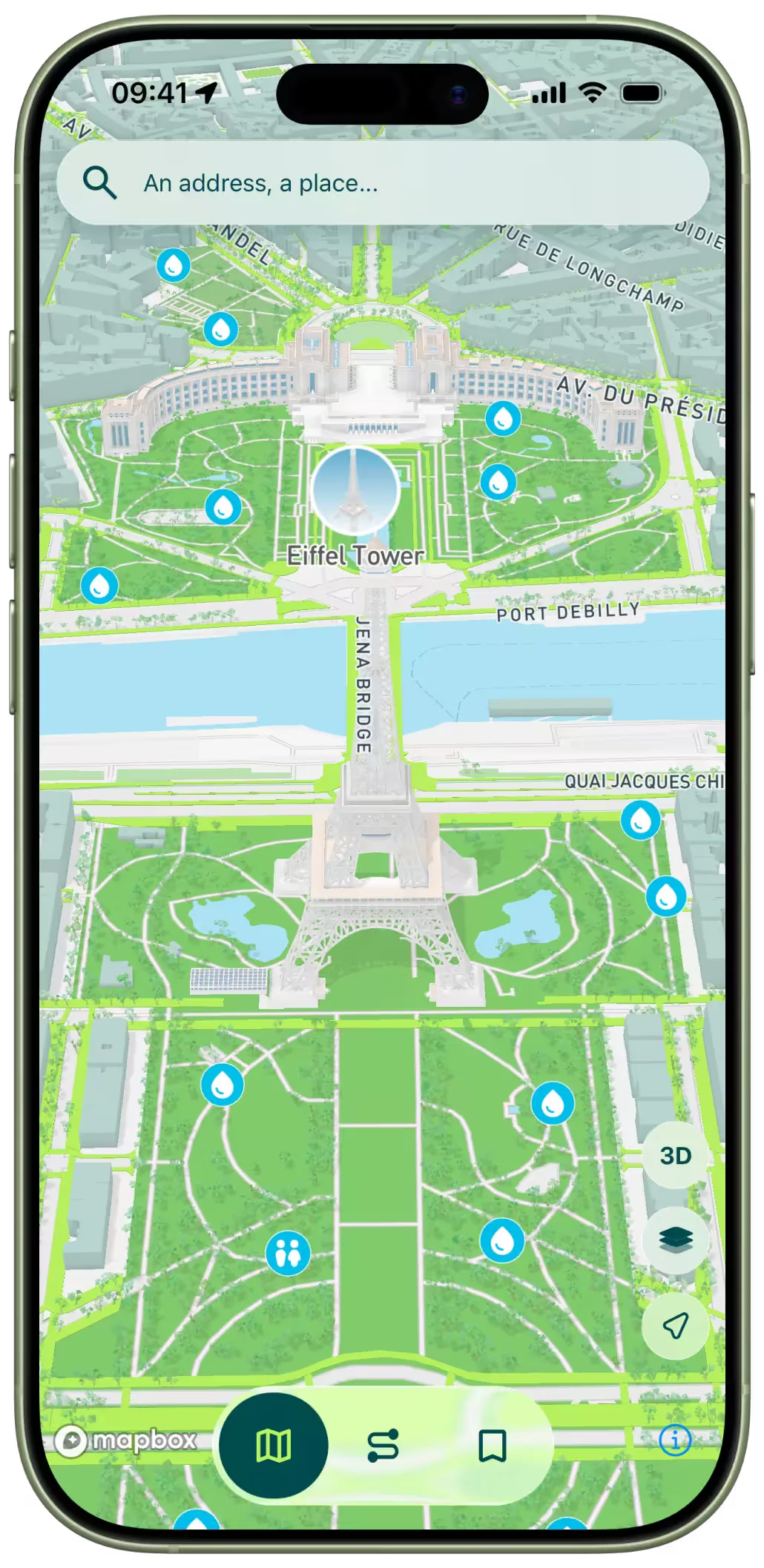
This corner of Paris is also where the practical layers matter most — the canal towpaths have water fountains and public toilets at irregular intervals, and knowing where they are turns a good long run into an easy one. The app's map overlays exist precisely for this: fountains, toilets, pedestrian crossings and the live position of your route, all on one screen, so you are not guessing where the next refill is on a hot August morning.
The west, the south and the woods — for distance and surface
When you want to run long, or run on something other than asphalt, you go to the edges. The Bois de Boulogne in the west and the Bois de Vincennes in the east are former royal forests just outside the Périphérique, both reachable on Métro line 1, both offering packed-dirt trails and loops from two to fourteen kilometres. The southern arrondissements — the 13th, 14th and 15th — have the Parc Montsouris, the Petite Ceinture and the long straight quays of the Left Bank for steady mileage. The west of the city, around the 16th, has the Trocadéro gardens and quick access to the Bois de Boulogne for anyone staying near the Arc de Triomphe.
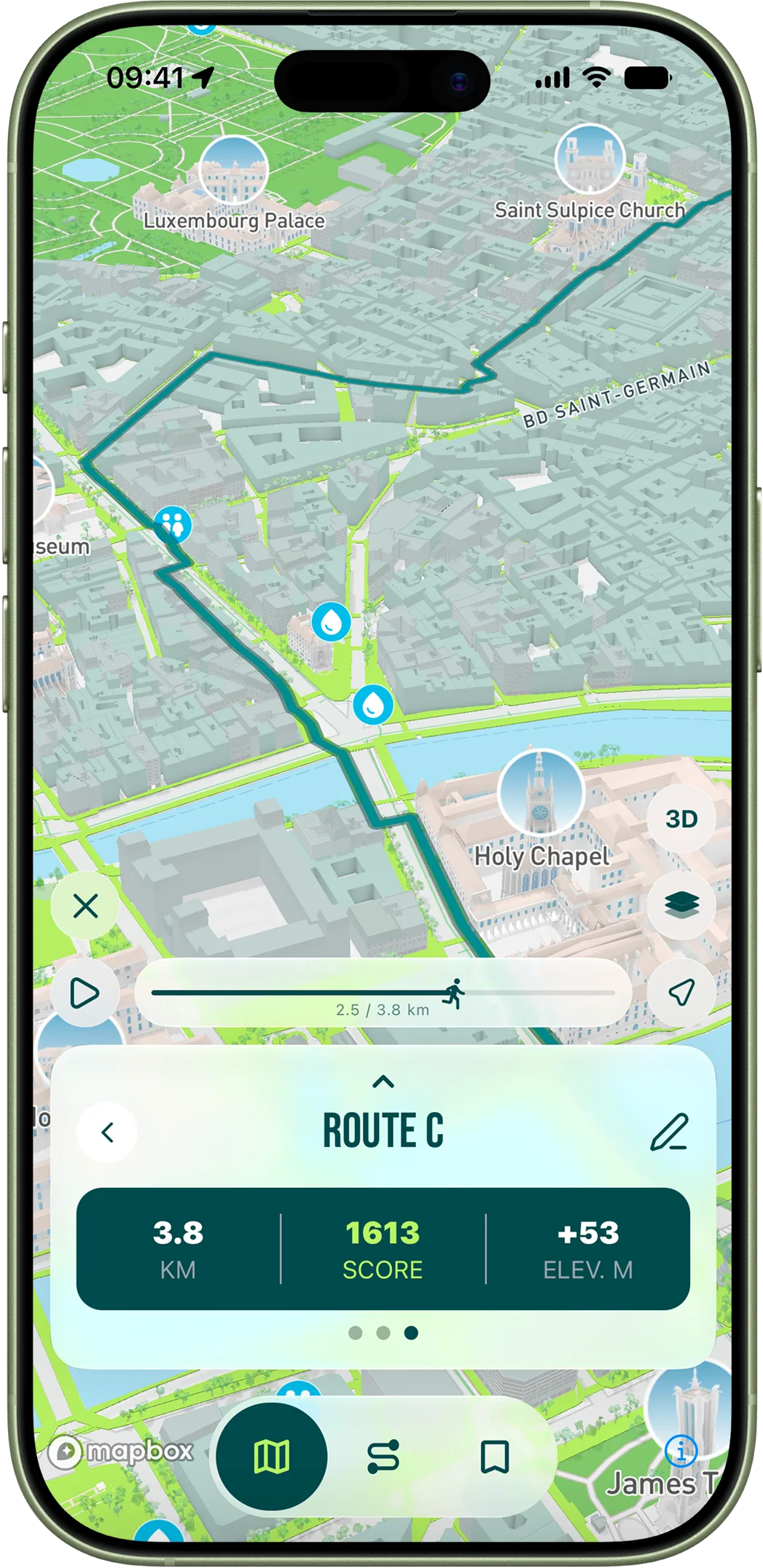
The single most useful thing to understand about running in Paris is that you should almost never run the obvious straight line between two points — there is nearly always a parallel route a block or two away that uses a park, a quay or a pedestrian street and feels like a different city. That is the whole reason RunninParis exists: open it, drop a starting address anywhere in these neighbourhoods, choose a distance, and it builds the version of the run a local would take. The map will show you the score, the elevation and the fountains before you lace up — so wherever in Paris you are starting from, the good run is already mapped.