

Running the Bois de Vincennes: Every Loop, Trail and Distance Worth Knowing
The east of Paris hides the city's biggest green space. Here is how to turn its 995 hectares into the loops, long runs and interval sessions that fit your week.
The Bois de Vincennes is the largest green space in Paris — roughly 995 hectares of former royal hunting forest sitting just east of the city, across the Périphérique from the 12th arrondissement. For runners living anywhere in the east and southeast of Paris it is the obvious destination, and it is genuinely better for training than almost anything inside the walls: packed-dirt and gravel surfaces that spare your joints, distances that scale from two to fourteen kilometres, and enough space that it never feels crowded even on a Sunday. It is reachable on Métro line 1 (Château de Vincennes), line 8 (Porte Dorée), and the RER A, which is why Parisians treat it as an extension of the city rather than an excursion.
The three loops that define the Bois
Most training here is built on three loops. The Lac Daumesnil loop in the western corner is the busy, social one — about 2.5 kilometres of flat path around the water, close to the Porte Dorée entrance, and the de facto meeting point for club sessions on weekend mornings. The Lac des Minimes loop on the eastern side is quieter, slightly shorter, and ringed by denser forest, which makes it the better choice when you want to run alone. And the Hippodrome de Vincennes perimeter gives you roughly six kilometres of mostly flat, wide trail with long uninterrupted straights — the closest thing the Bois has to a track, and the place to do tempo work.
Long runs, surfaces and getting there
For distance, you stop thinking in loops and start linking them. A run that connects the Lac Daumesnil, the Route de la Pyramide and the Lac des Minimes can pull twelve to fourteen kilometres without repeating itself, almost all of it on soft surface. The Bois is gently rolling rather than hilly — you will gather modest elevation across a long run but nothing like the Buttes-Chaumont — so it is ideal for steady aerobic volume. The two practical things to plan are entrances and water: there are well over a dozen gates but only a few sit near a Métro stop, and fountains are concentrated near the lakes rather than spread evenly through the forest.
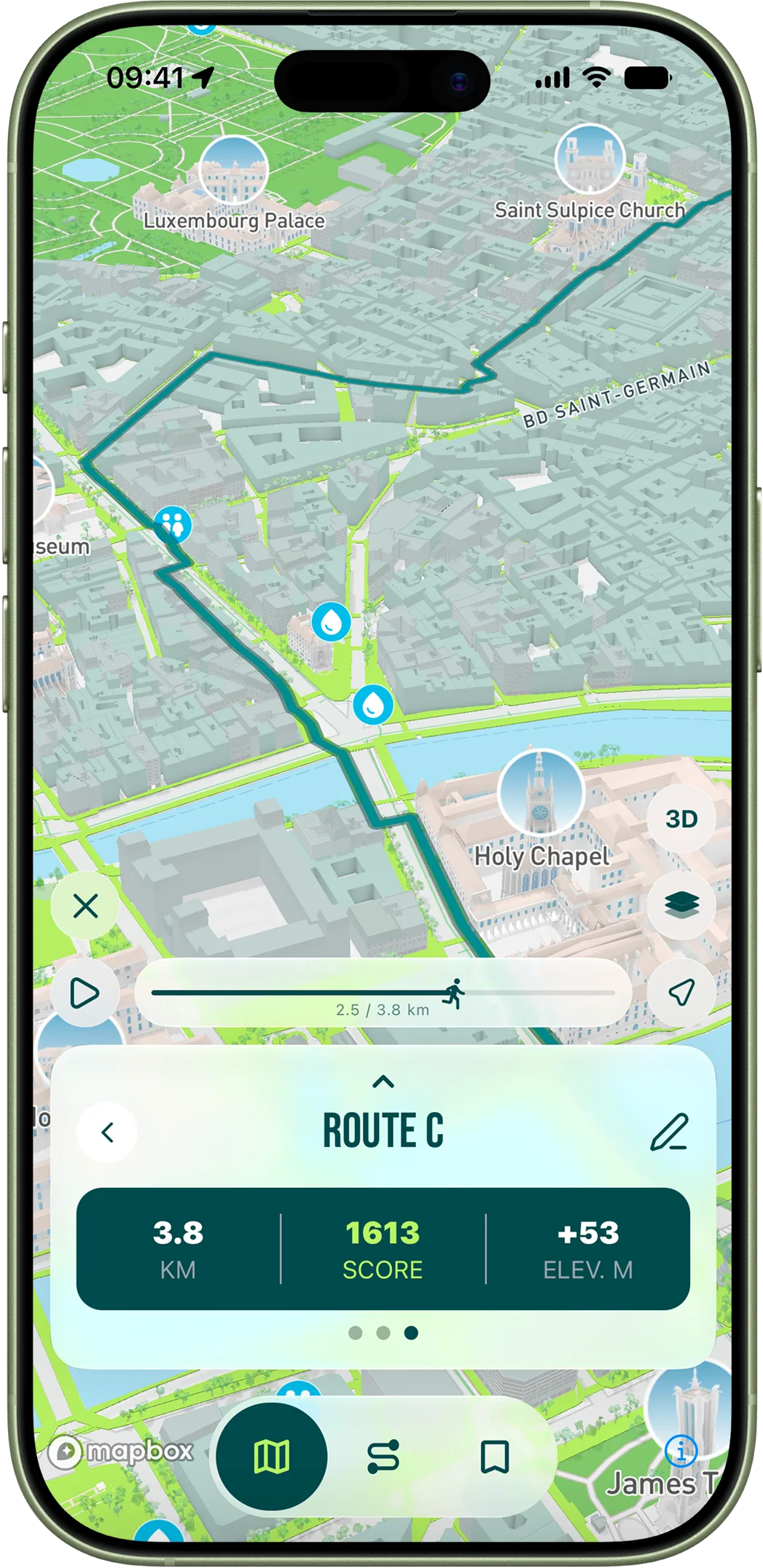
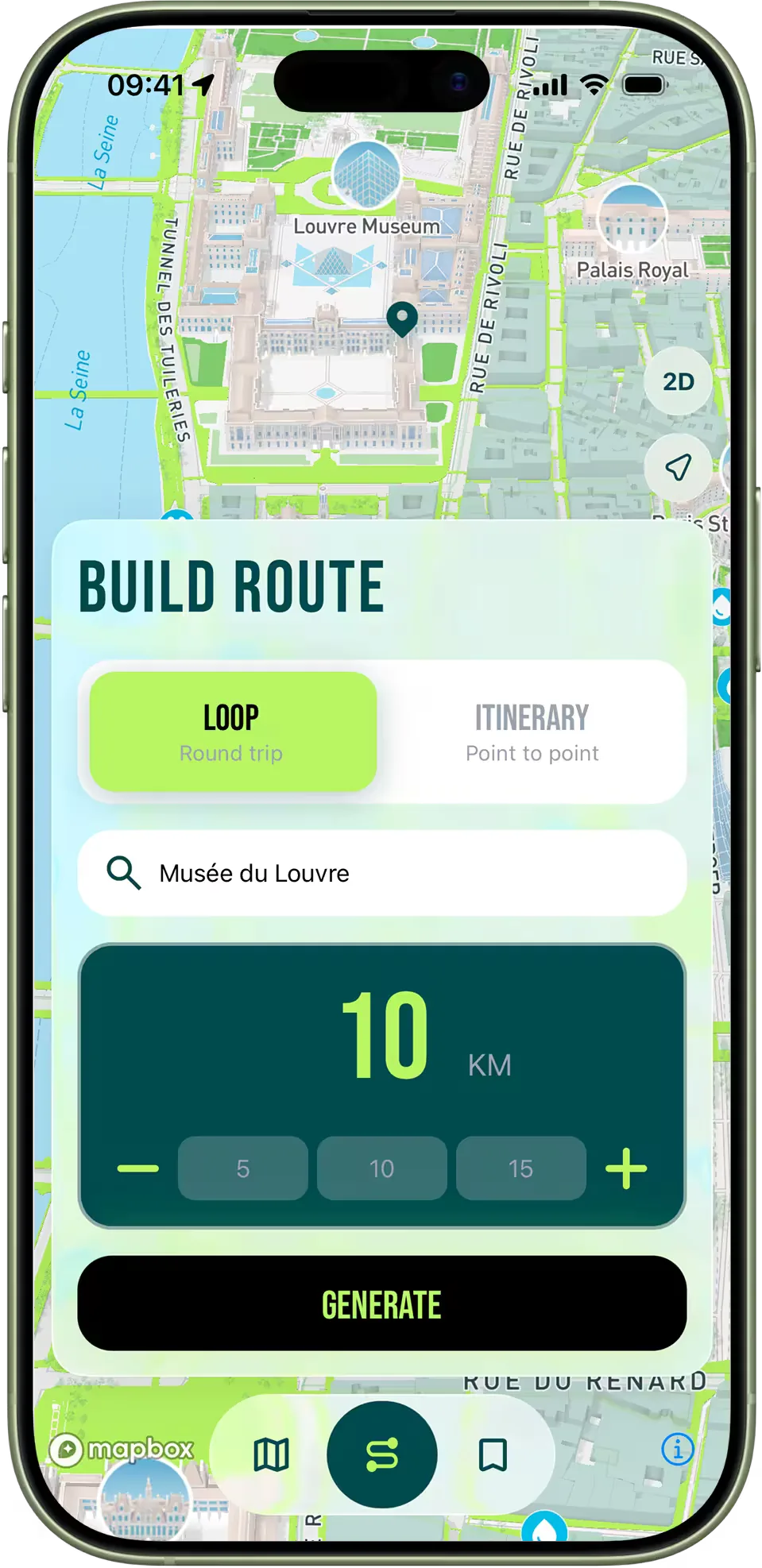
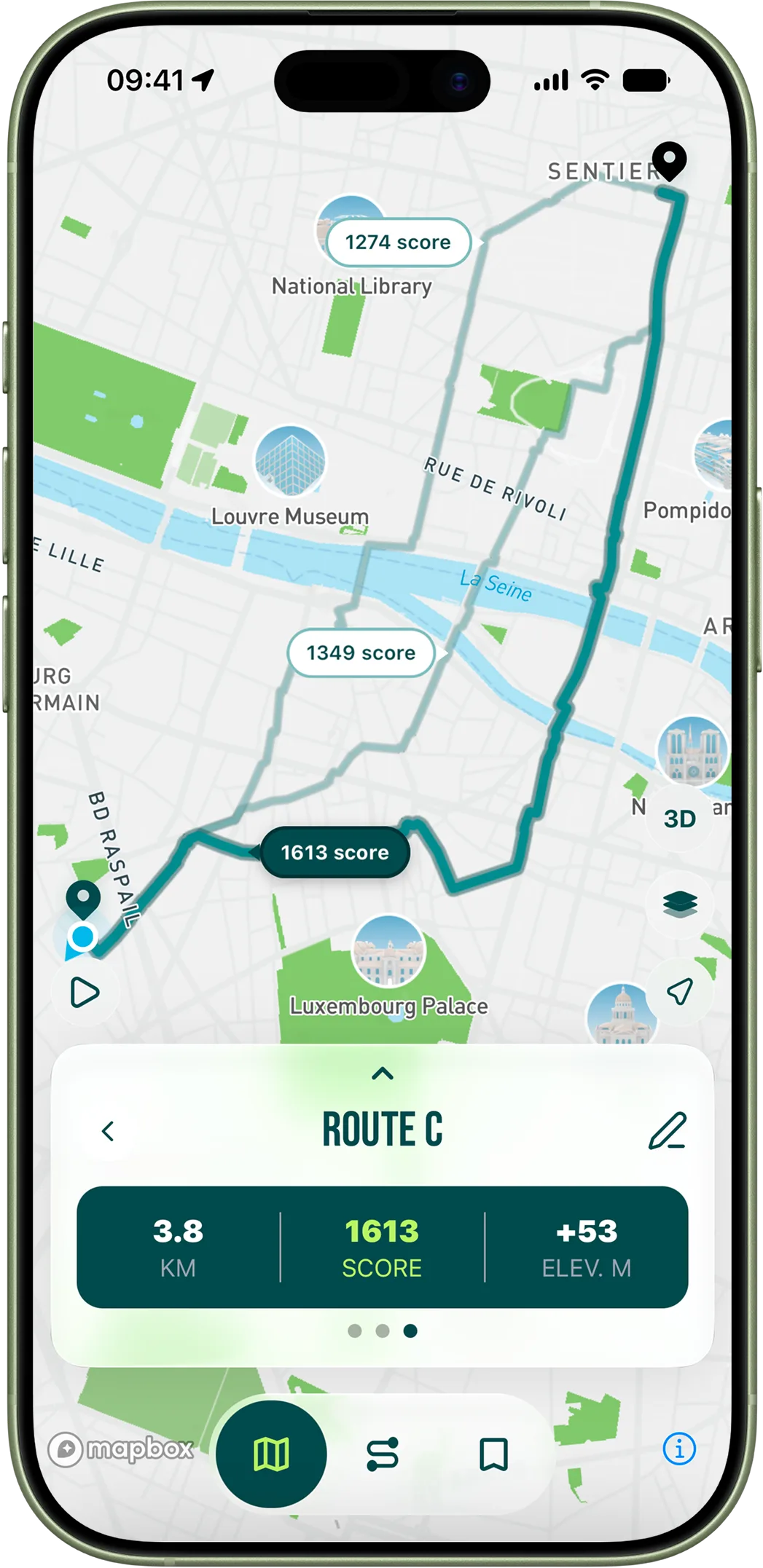
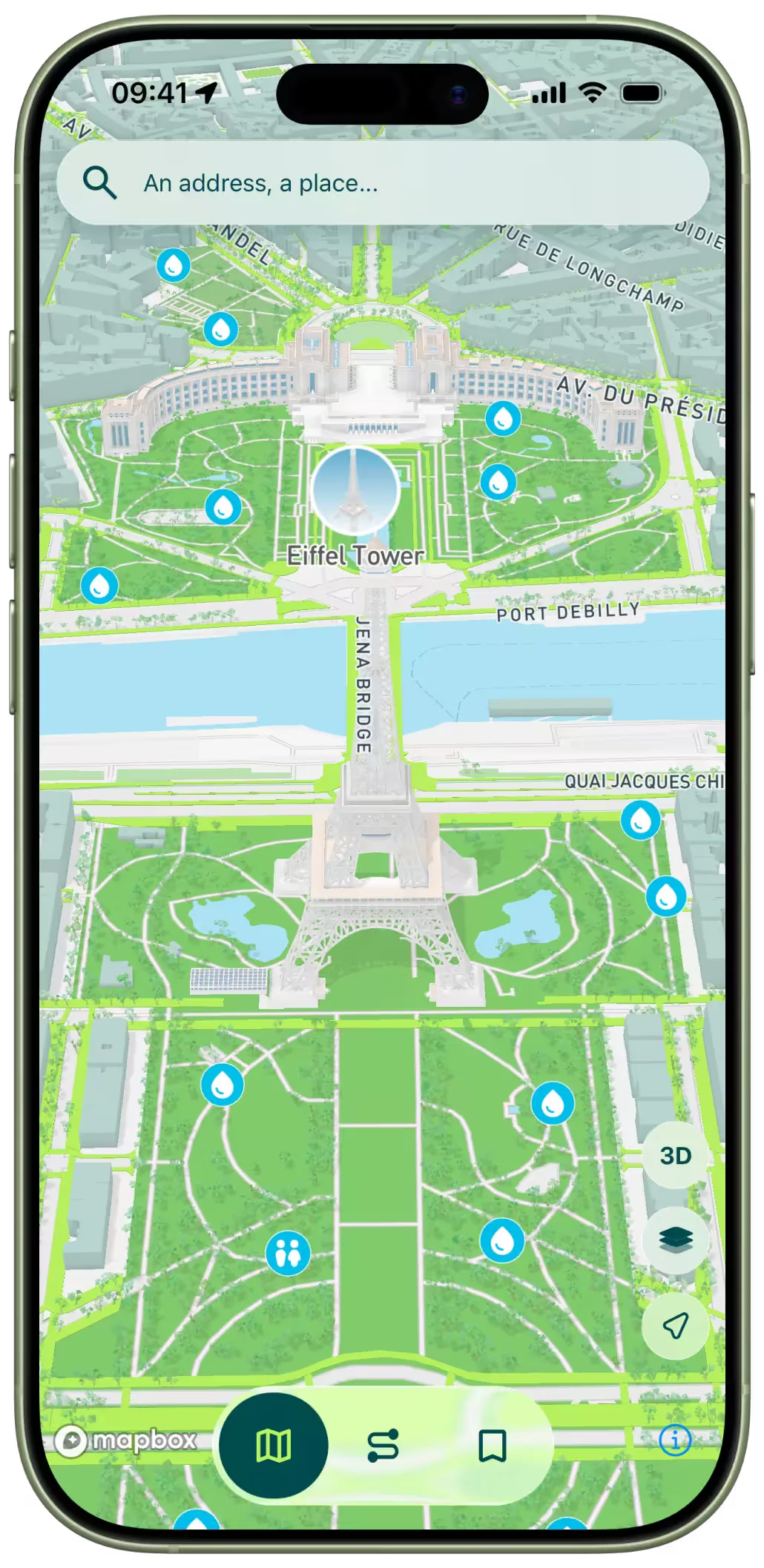
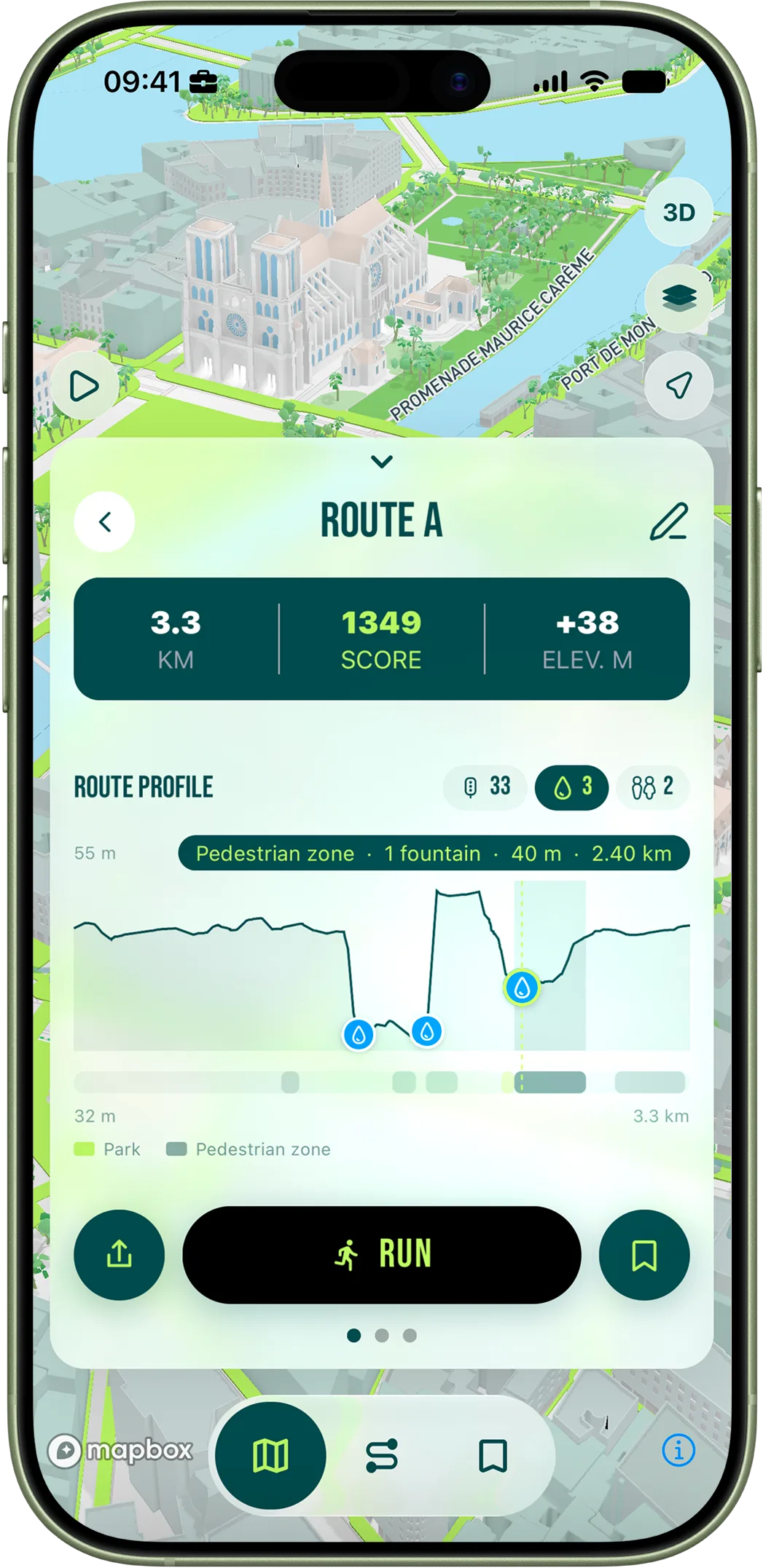
This is where setting the route in advance pays off. Give the app the entrance address and a distance and it builds a loop that starts where you actually arrive, keeps you on the soft trails rather than the perimeter roads, and shows the elevation profile and the fountains before you go. The 3D map view is genuinely useful here, because the Bois is large enough that a flat 2D map hides how the paths connect — seeing the route laid over the terrain makes it obvious which way to run it. Set it up before you leave the Métro, export it to your watch, and the biggest forest in Paris stops being a place you wander and becomes a place you train.