

The Best 10K Running Routes in Paris: Five Loops That Actually Work
Ten kilometres is the benchmark distance, and Paris has more good 10K loops than almost any capital. Five we keep coming back to — and how to build your own.
Ten kilometres is the distance most runners measure themselves by. It is long enough to mean something and short enough to do before work, and in a city as compact as Paris it is the perfect canvas: a 10K loop can take in the river, a park and three monuments without ever doubling back. The problem is that the obvious 10K — whatever Google Maps draws between two points — is almost always the worst one, full of red lights and narrow pavements. These five loops are the ones we actually run, each genuinely close to ten kilometres, each chosen because it flows.
Five 10K loops worth saving
The Seine monuments loop is the one to do first: start at the Pont de la Concorde, run the Right Bank quays east to the Pont Marie, cross to the Left Bank and come back west past Notre-Dame, the Musée d'Orsay and the Invalides. It is flat, almost entirely car-free on the lower quays, and lands within a few hundred metres of ten kilometres. The Bois de Vincennes lakes loop strings the Lac Daumesnil and Lac des Minimes together on packed dirt for a softer, greener 10K in the east. Its mirror image in the west, the Bois de Boulogne loop around the Lac Inférieur and the Allée de Longchamp, does the same job for anyone staying near the Arc de Triomphe.
For the northeast, the canal out-and-back from the Bassin de la Villette up the Canal de l'Ourcq and back gives you a dead-flat, lit ten kilometres ideal for a steady tempo or a winter evening. And for runners who want elevation, the Buttes-Chaumont and canals loop climbs the park twice and links it to the water for a 10K with around a hundred metres of vertical — the closest thing Paris has to a hilly benchmark route.
Building your own 10K instead
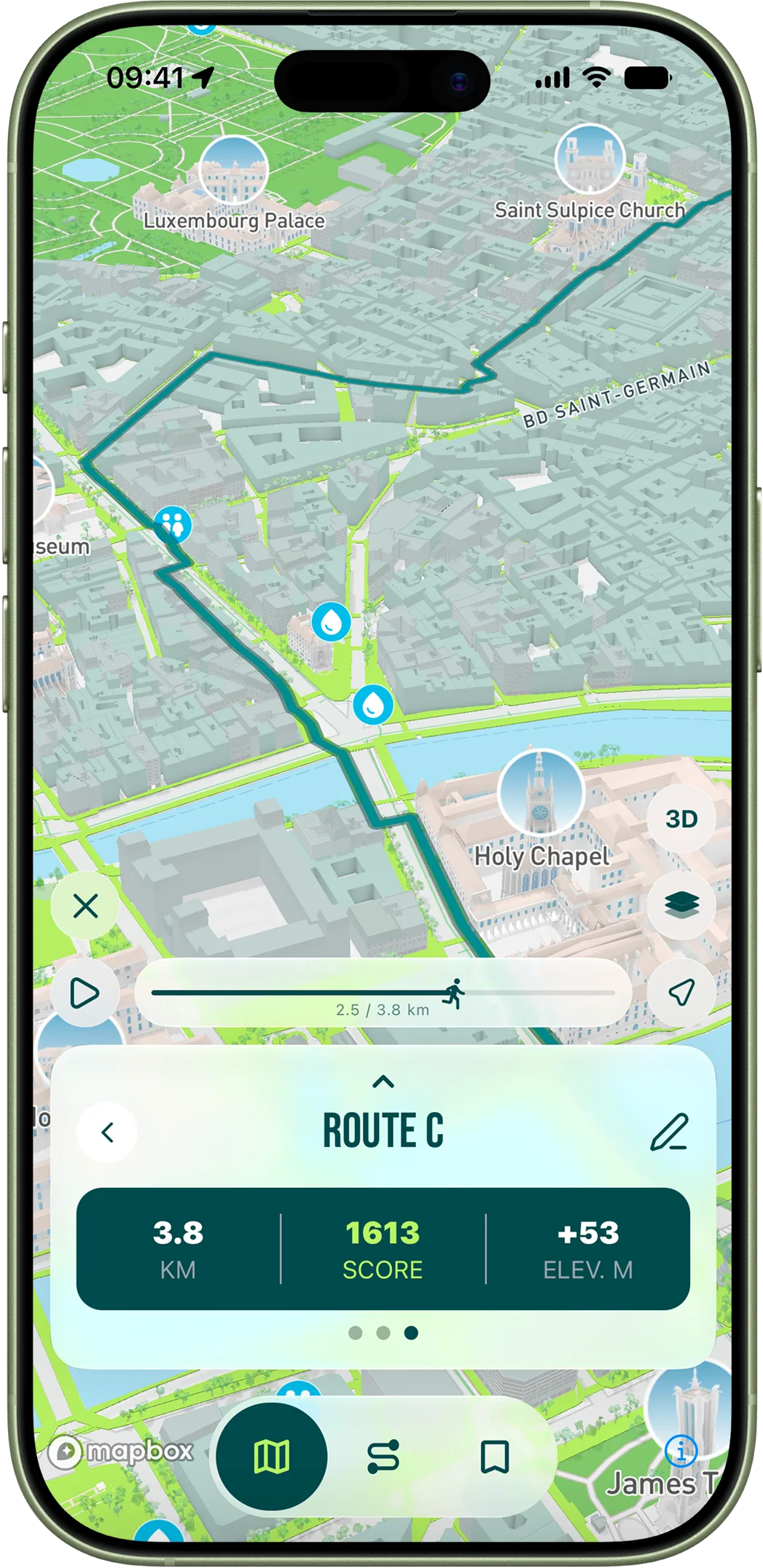
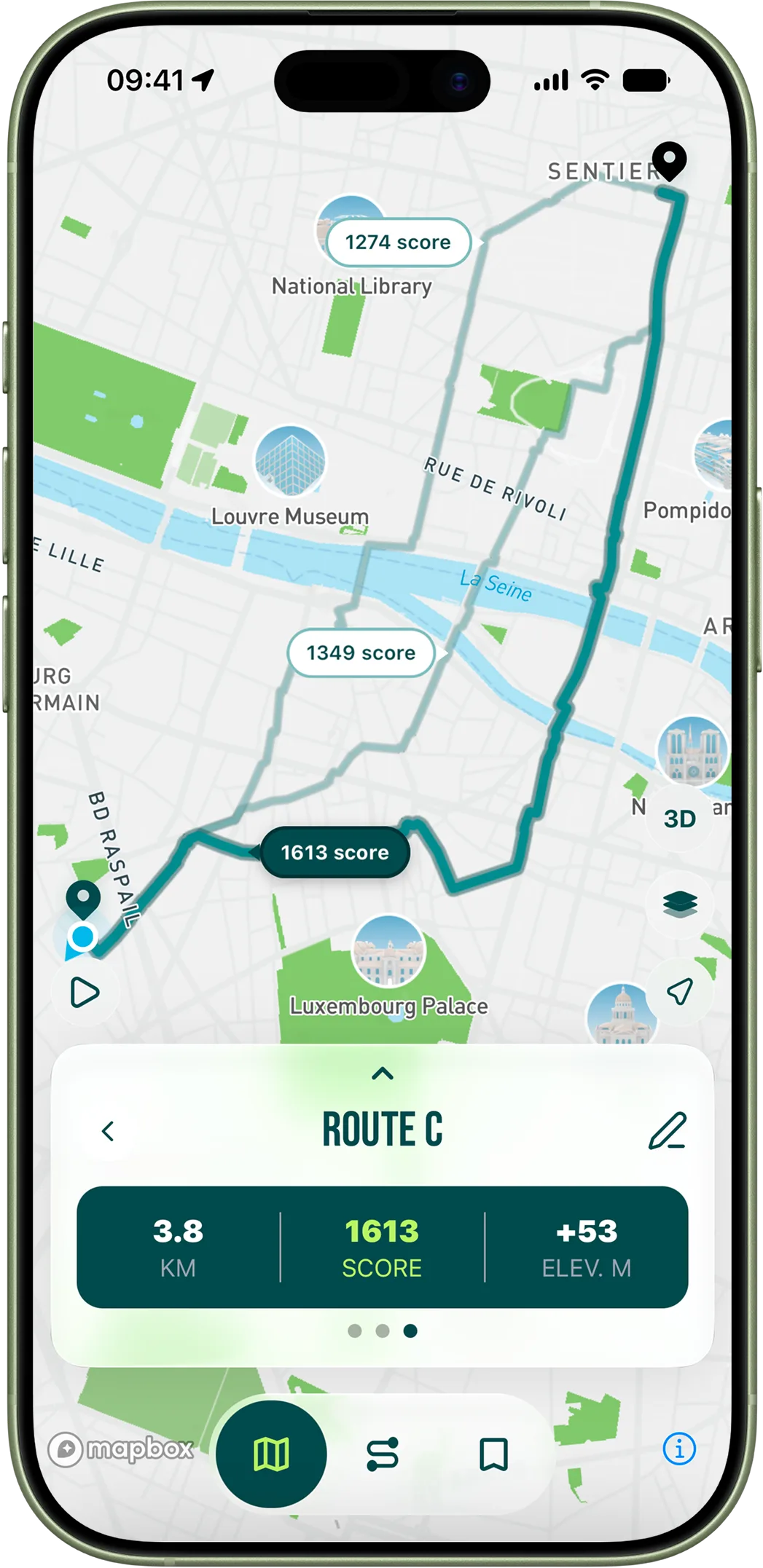
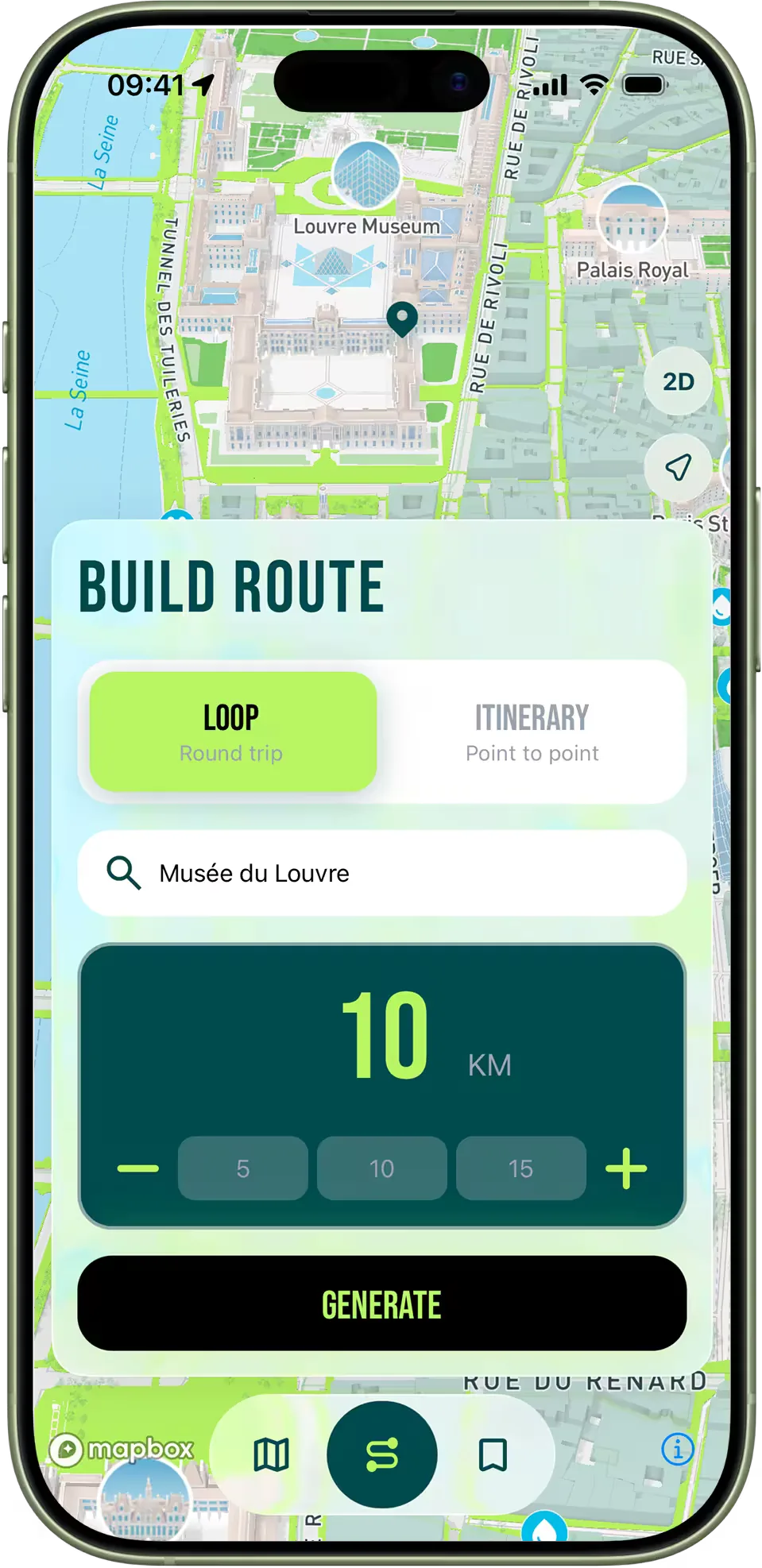
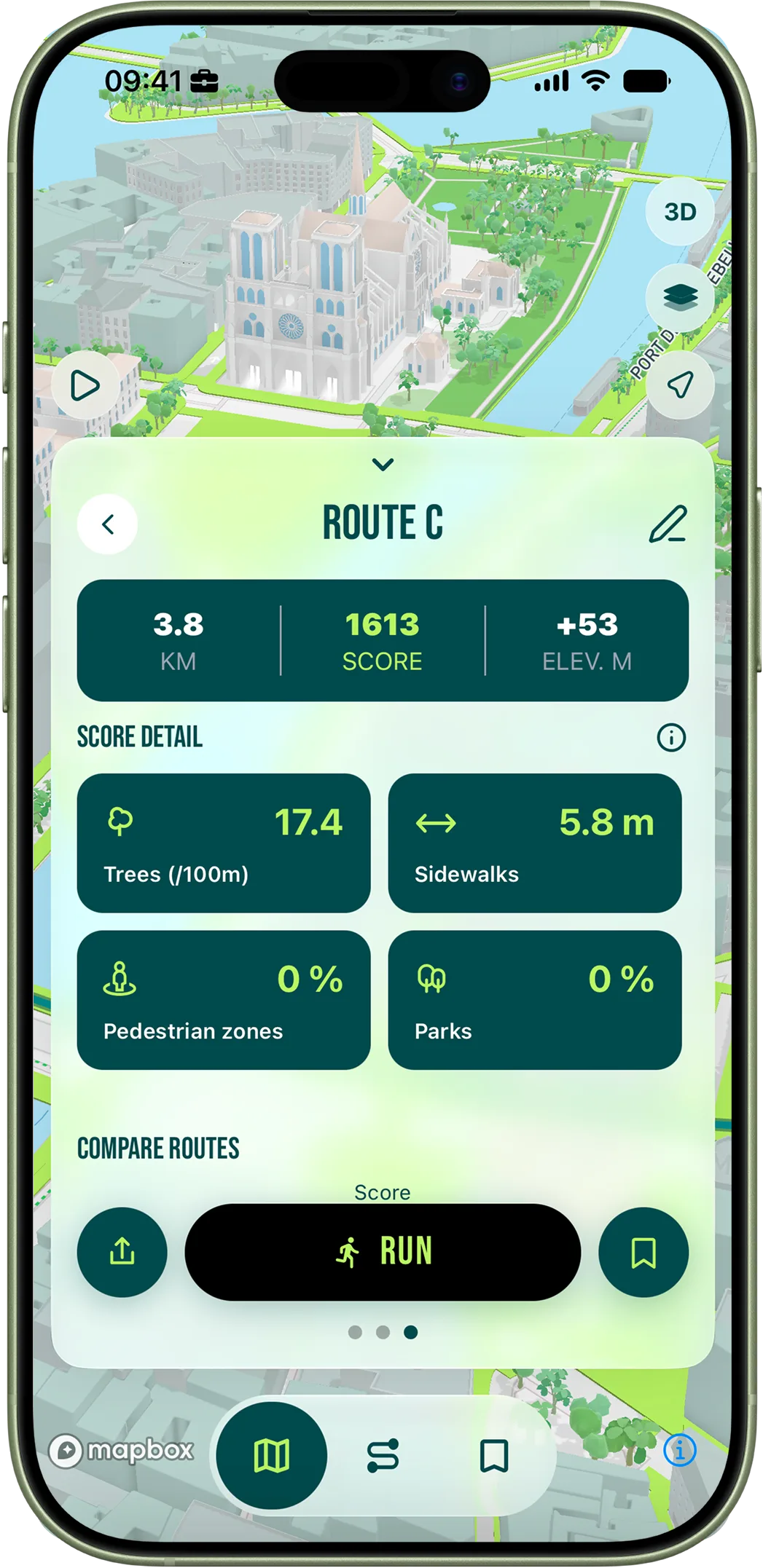
Five named loops only help if you happen to start near one of them, and most people do not. The more useful skill is being able to generate a good 10K from your own front door, which is exactly the problem the app solves. You set your address and ask for ten kilometres, and instead of one rigid route it builds three to six options and scores each on the City of Paris open data — parks, tree cover, sidewalk width, pedestrian zones and crossings. Two 10K loops from the same door can score completely differently, and the breakdown shows you why before you commit: how much of the route runs through green space, how many major crossings it forces, where the climbs sit. You can run it as a loop, an out-and-back, or a one-way you finish at a café — and export the whole thing as GPX to your watch. Ten kilometres is the distance that rewards a good route the most, because every red light and narrow stretch you avoid compounds over the full loop.