Night Running in Paris: The Lit Routes, the Safe Streets, the Rules
Paris is one of the best cities in the world for night running — if you know where to go. A complete guide to running after dark: routes, lighting, safety and the unexpected pleasures.
Paris at night is a different proposition from Paris in the daytime, but not in the way most people assume. The question runners from other cities ask is: is it safe? The answer, for the routes described below, is substantially yes — the combination of dense street lighting, high foot traffic on the river and canal corridors even at 10 p.m., and Paris's extremely low rate of street crime in its central arrondissements makes the city one of the better night-running environments in Europe. The real question is not safety but logistics: which routes stay lit and comfortable after dark, how do you handle visibility, and what changes at night that you should plan around?
The honest safety answer depends on where you go. The Seine quays, the Canal Saint-Martin, the Canal de l'Ourcq, the Marais, the major boulevards and the park perimeters are all well-lit and peopled into the early hours. The peripheral areas of the 18th east of the Boulevard Barbès, the outskirts of the Bois de Boulogne after dark, and the back streets of the 13th and 20th are routes where solo runners — particularly solo women — should think more carefully. The same common-sense rules that apply to night running everywhere apply here: stick to lit populated routes, carry your phone, tell someone where you are going, and don't navigate while listening to music with both ears covered. With those caveats, Paris is genuinely excellent at night.
The tier-one night routes
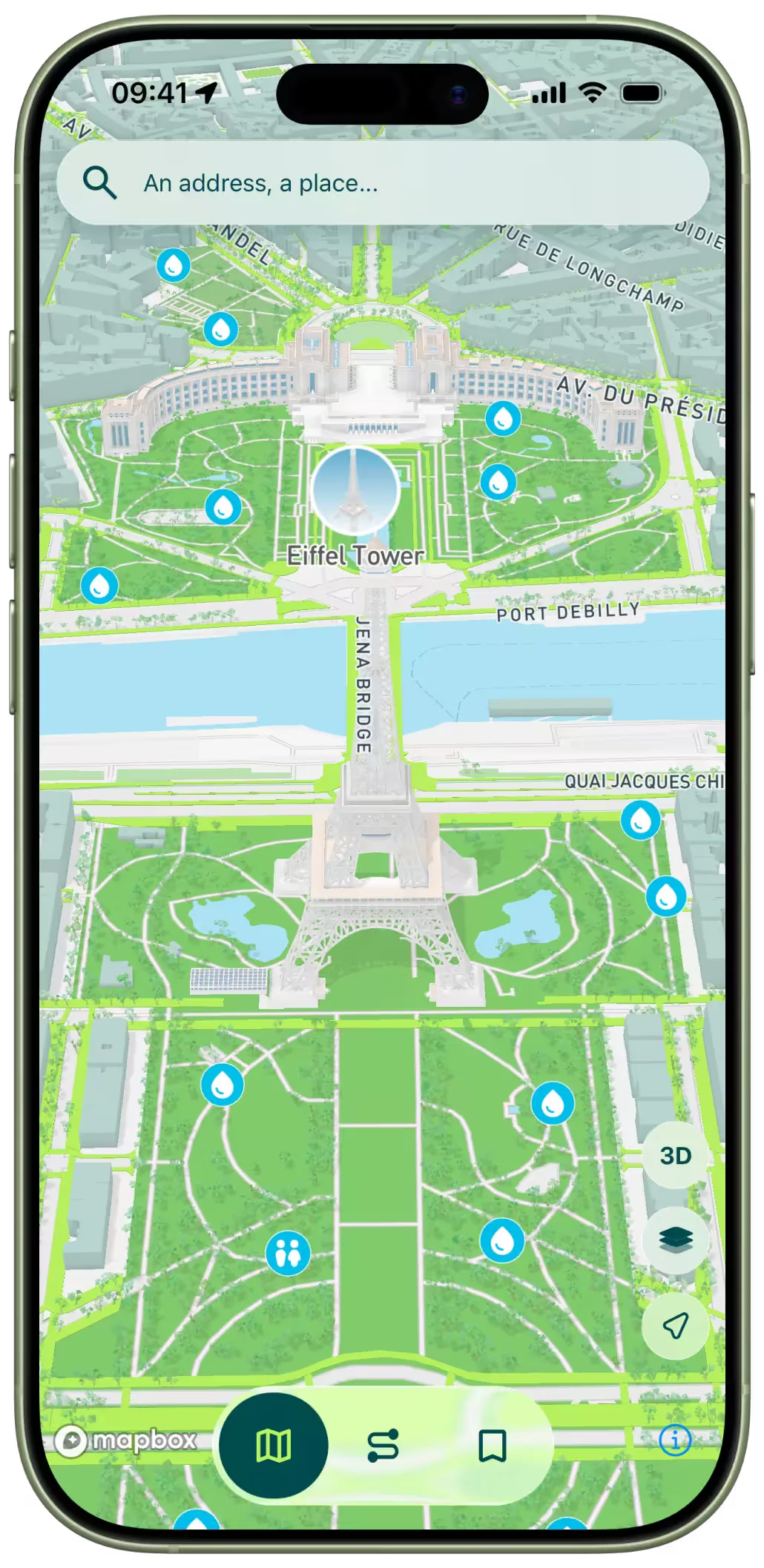
The Seine right bank from the Pont d'Iéna to the Pont de Bercy is the gold standard for night running in Paris. The quay is continuously lit from city lampposts and the reflected glow of buildings, monuments and tour boats. The Eiffel Tower illumination until midnight — full sparkle show every hour on the hour — provides a fixed reference point visible for several kilometres west. The surface is smooth, the width generous, foot traffic substantial enough to feel accompanied without being impeded. The left bank is slightly less lit but still excellent.
The Canal Saint-Martin from the Place de la République to the Bassin de la Villette is the second-best night route. Canal banks are lit, parallel streets are lively cafés until late, and the characteristic arched bridges and locks photograph exceptionally well under artificial light. The full north-south run is about 4.5 kilometres; extending onto the Canal de l'Ourcq eastward adds as much flat, lit distance as you want. Mid-week evenings on the Ourcq between 9 p.m. and 11 p.m. have almost zero foot traffic — ideal for runners who want the canal without weekend crowds.
The Marais on a weeknight is a genuinely excellent night-running neighbourhood that most runners overlook. Bars, restaurants and galleries keep the streets of the 3rd and 4th very well populated until 11 p.m. or later. A loop starting at the Place de la Bastille, running north on the rue Saint-Antoine, west on the rue Rambuteau, south on the rue Beaubourg, east on the rue de Rivoli and back to Bastille is about four kilometres of consistently lit, safe urban running. Add the Île Saint-Louis perimeter (about 1.5 kilometres) for a six-kilometre loop that is unmistakably different at night than at any other time.
The practicalities: visibility, gear, navigation
Running at night in Paris requires thinking about being seen, not about seeing. The city lighting on recommended routes is comprehensive enough that a headlamp is rarely necessary and often counterproductive — it illuminates six metres ahead while ruining peripheral vision for the lit environment beyond. Focus instead on being visible: reflective gear front and back is the standard. Minimum is reflective strips on shoes and a light-coloured jacket. Flashing LED clips work on canal routes shared with cyclists. Skip the headlamp unless going into unlit sections of the Bois de Boulogne or Vincennes.
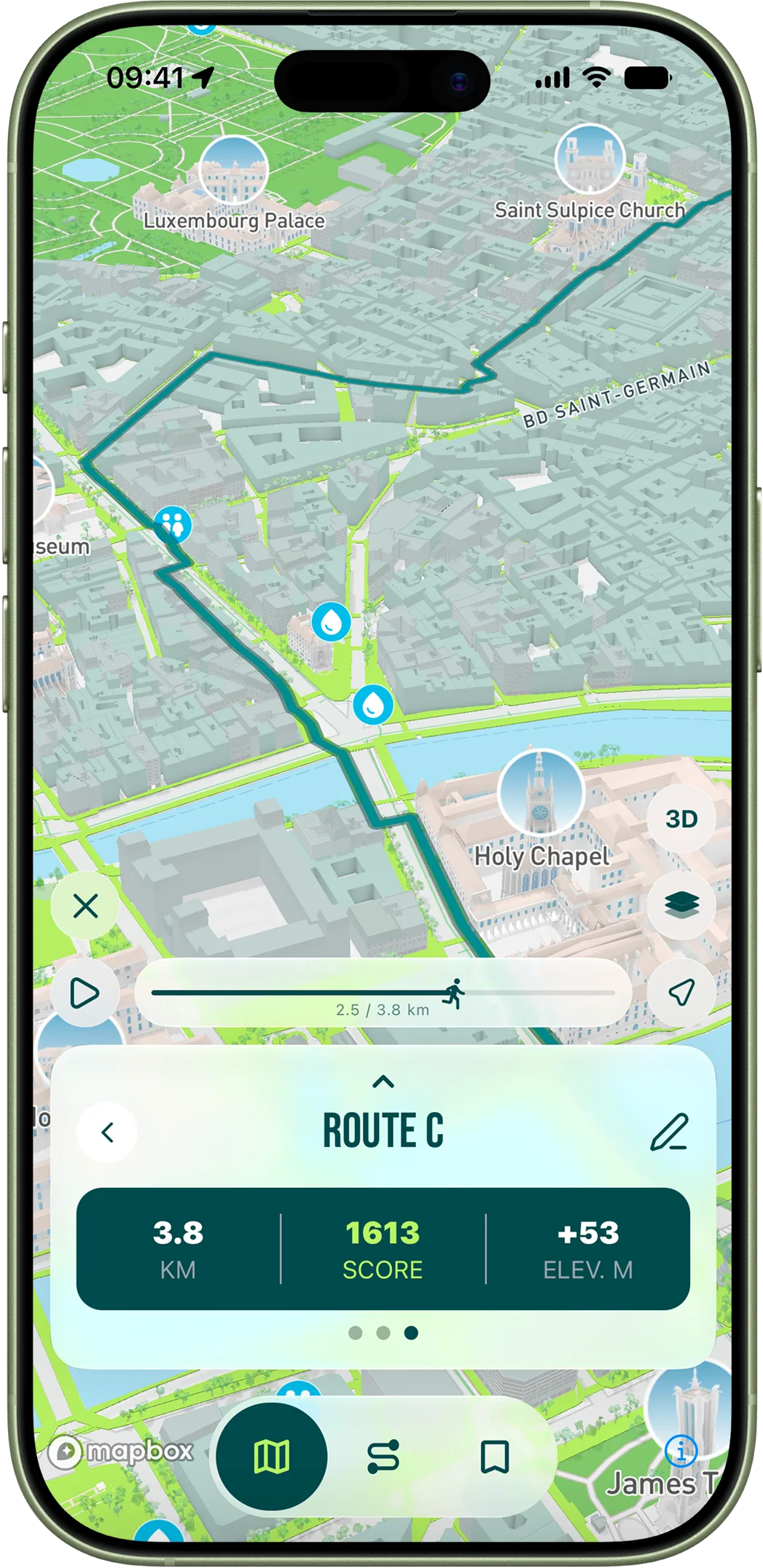
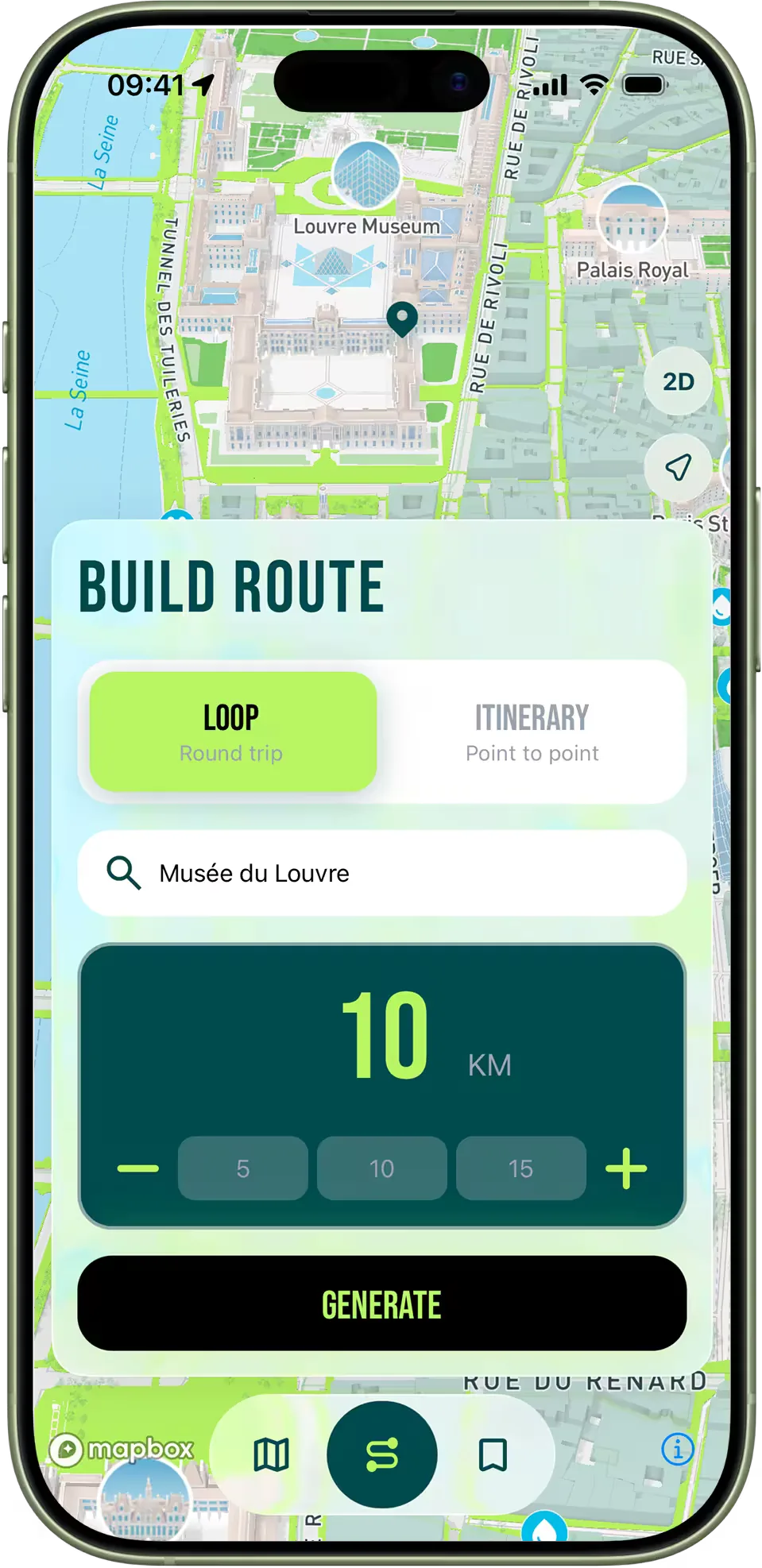
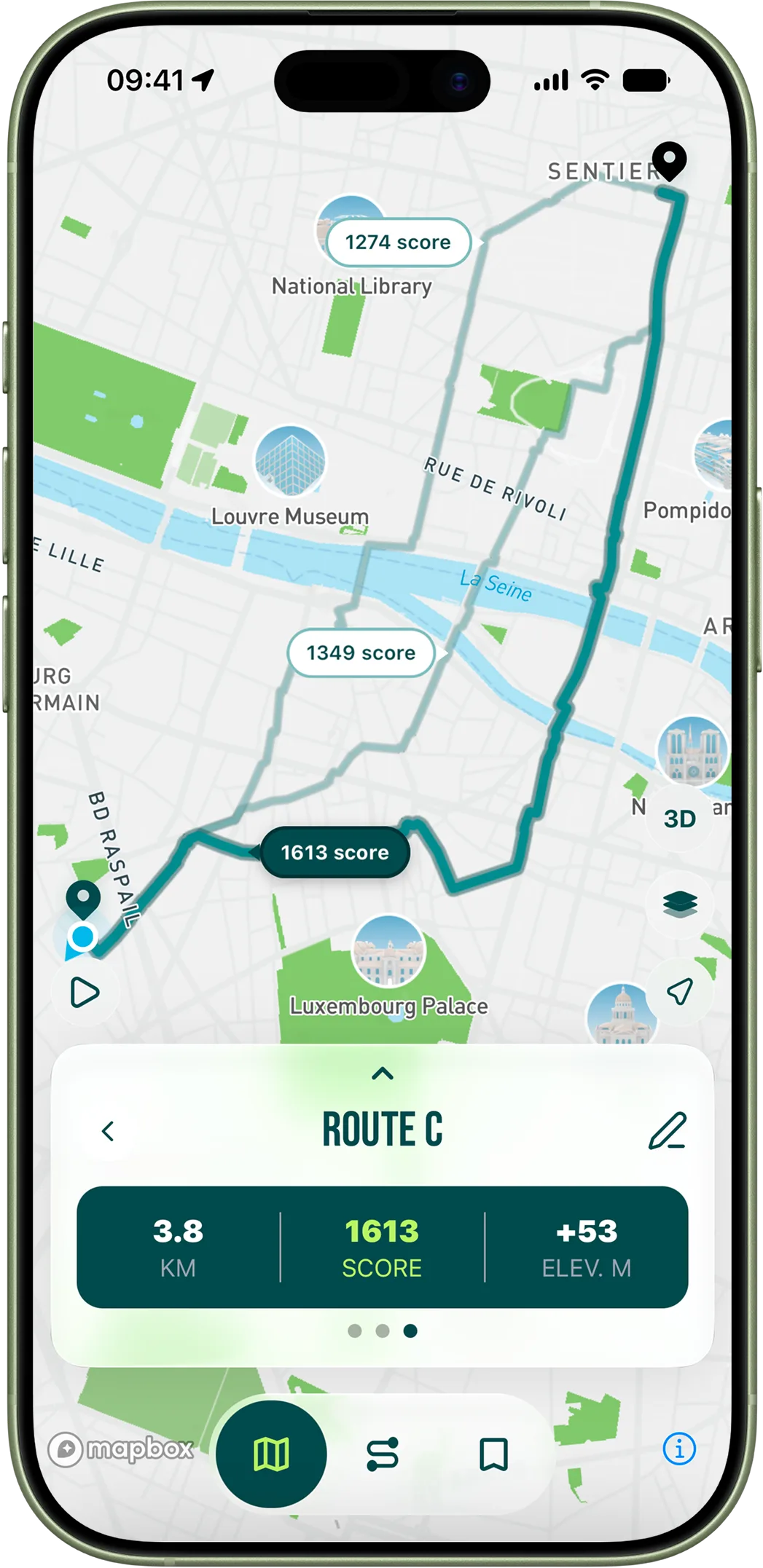
Navigation is simpler at night than runners expect because Paris's core grid is well enough known: the Seine is always south, the Eiffel Tower is visible from almost anywhere west of the 12th, La Défense towers mark northwest, the Sacré-Cœur crowns the north horizon. Stay within the well-lit inner ring — the 1st through 11th and the river corridor — and you are always within a kilometre of a Métro station. The RunninParis route generated for daytime works equally well at night on the scored corridors; the main adaptation is avoiding smaller cross-streets in the 13th or 19th where lighting is patchier. Check the pedestrian zone overlay before going — pedestrian streets are almost always better lit than adjacent traffic streets.
The unexpected pleasures
The obvious one is the Eiffel Tower sparkle, which is a genuinely different experience from the river than from the ground. Less obvious: the Musée d'Orsay clock face, lit from inside, visible from the right-bank quay around kilometre seven of a Seine run, is one of the most unexpectedly beautiful urban views in the city. The reflected light of the Pont Alexandre III — whose lampposts and golden statues are lit year-round — converts the river surface into something genuinely ornamental. The Canal Saint-Martin at 10 p.m. on a warm June evening has a particular quality of light and noise — café music from open windows, reflections in the canal locks, the mixed crowd of joggers and evening walkers — that is worth seeking out as an experience rather than just a training session. The Paris night run is the one run type that consistently produces the feedback: "I had no idea the city looked like that." It does. Go after dark.