The Paris Marathon and Half 2027: The New Ballot, and the Training That Starts Now
Bibs for the 2027 Paris Marathon and Half are now drawn by ballot, and applications close on 30 September. The dates, the prices, the group clause, and why the marathon course is the best training ground in Paris.
For twenty years, entering the Paris Marathon was a test of typing speed: open the registration page at the appointed hour, refresh, and pay before the price tier moved. Since Tuesday 8 September 2026 at 2 p.m., that is over. Bibs for the 2027 Paris Marathon and Half Marathon are allocated by ballot, and the only thing that matters now is having applied before 30 September. Applying on the 8th and applying on the 29th give you exactly the same odds. It is the biggest change either race has seen in years, and it hides several others.
The dates, the prices, and the clause worth reading
The Semi de Paris runs on Sunday 7 March 2027 and the Paris Marathon on Sunday 4 April 2027. The application window is open from 8 to 30 September 2026, results are announced from 1 October, and runners who are drawn have 72 hours to pay for their bib before the place goes back into the pool. A marathon bib costs 169 euros and a half bib 79 euros, with a 5% discount for FFA licence holders; a thousand solidarity bibs are held back on each race, at 50 euros for the marathon and 25 for the half.
The clause that actually changes something sits further down the page: you can apply as a group of two to six, and if a single member is drawn, the whole group is in. Six friends applying together are no longer playing six independent tickets. They are playing one draw for six places. That is the best reason of the season to talk to your run club before 30 September.
The rest of the changes arrive with the new organiser, Cadence Running, taking over from ASO for the coming editions: an official bib resale platform, and a finisher medal and shirt that become optional. It is worth naming what the ballot costs, too. It removes the scramble, but it adds three weeks of not knowing. You will not find out whether you are running until 1 October, while a build for an April marathon starts now.
The marathon course is Paris, and you can train on it
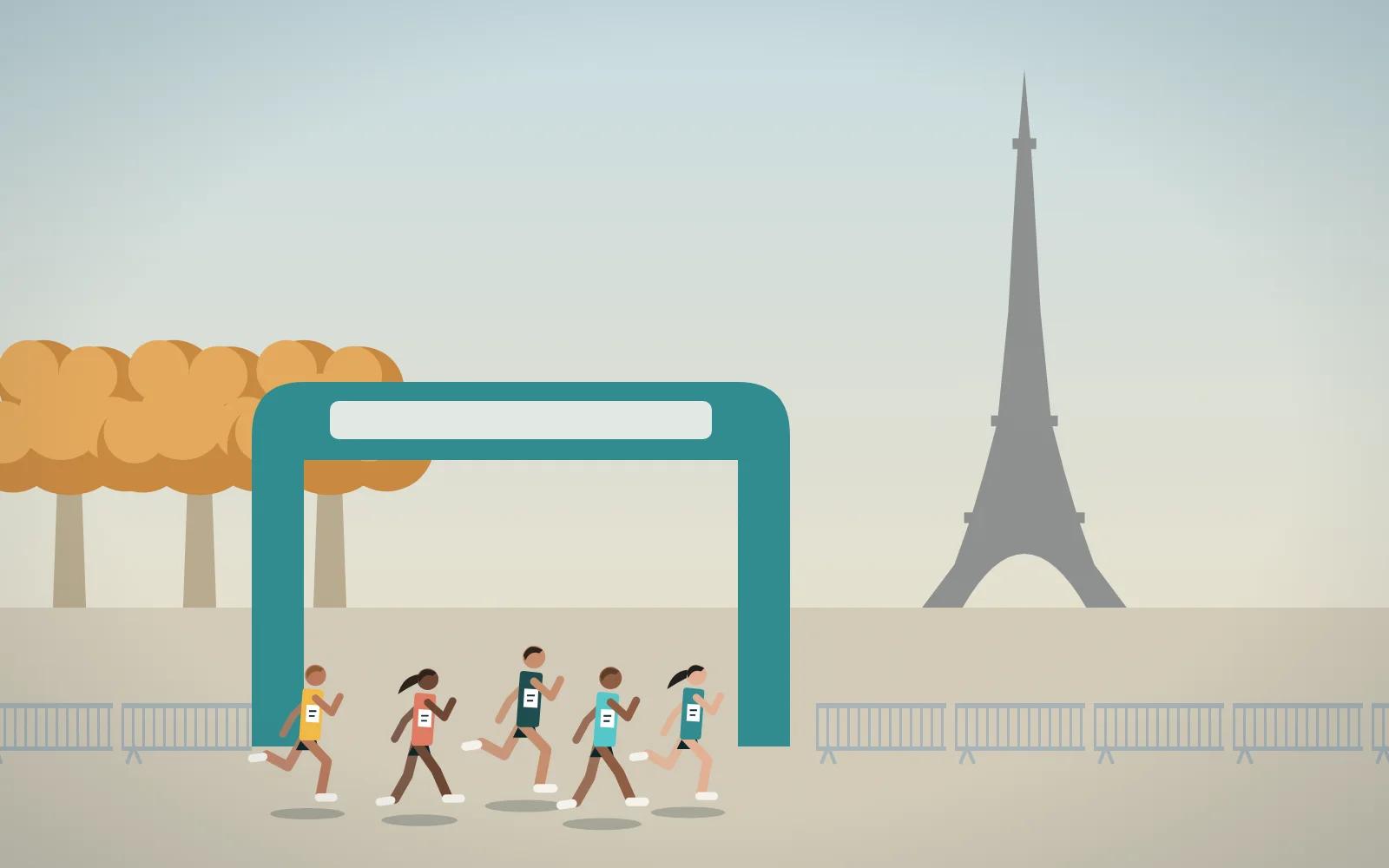
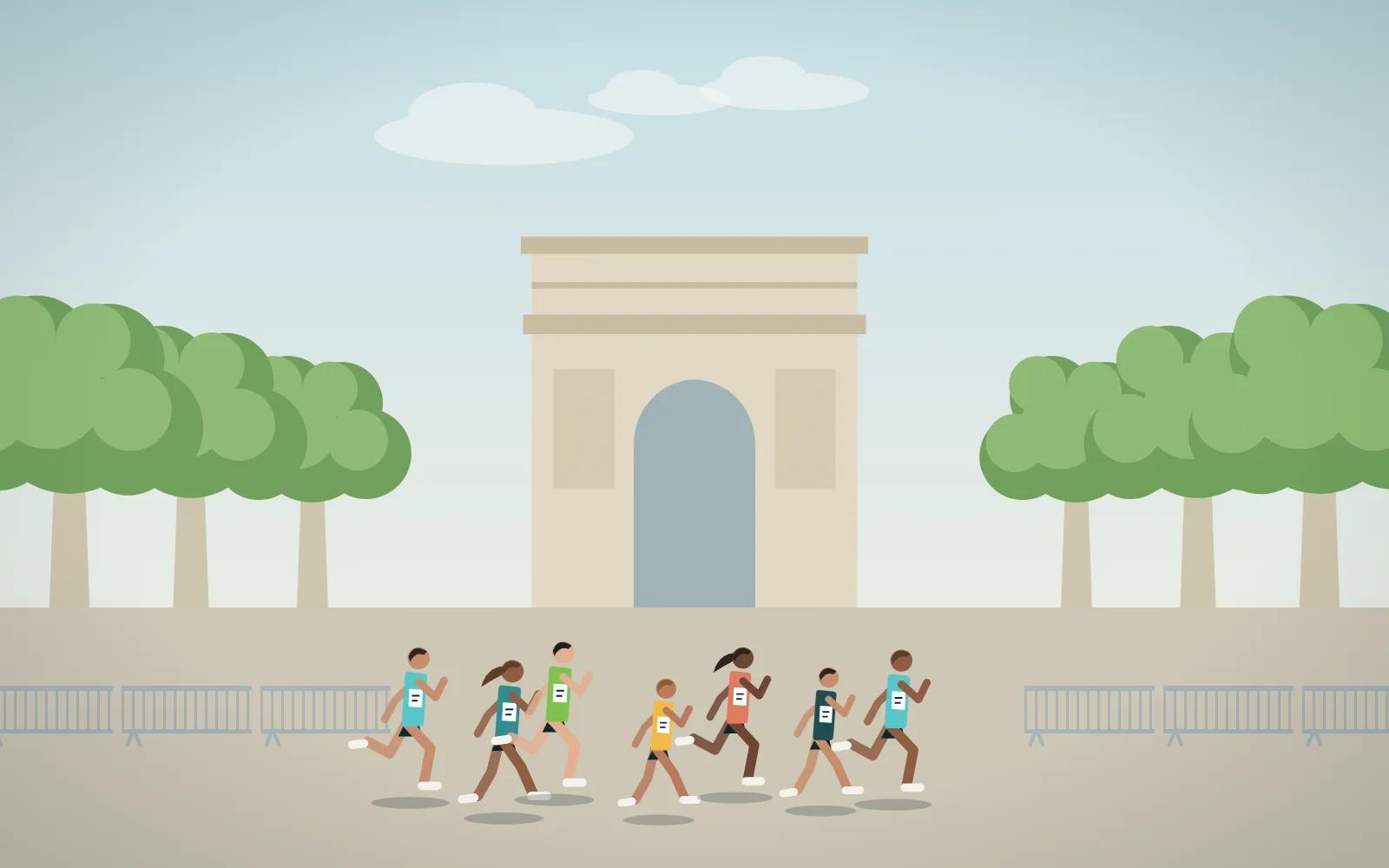
Few big-city marathons share this: the route does not run through a city sealed off for the occasion, it uses streets, quays and woods you can go and run on an ordinary Sunday morning. The 2027 course has not been published, and the organiser will only reveal it early in 2027, but the start and finish stay on the Champs-Élysées and the Avenue Foch, and recent editions give the shape of it: Rivoli, Bastille, Nation, ten kilometres inside the Bois de Vincennes, then back west along the Seine quays, the Eiffel Tower at kilometre 30, a loop into the Bois de Boulogne and the final climb to the finish.
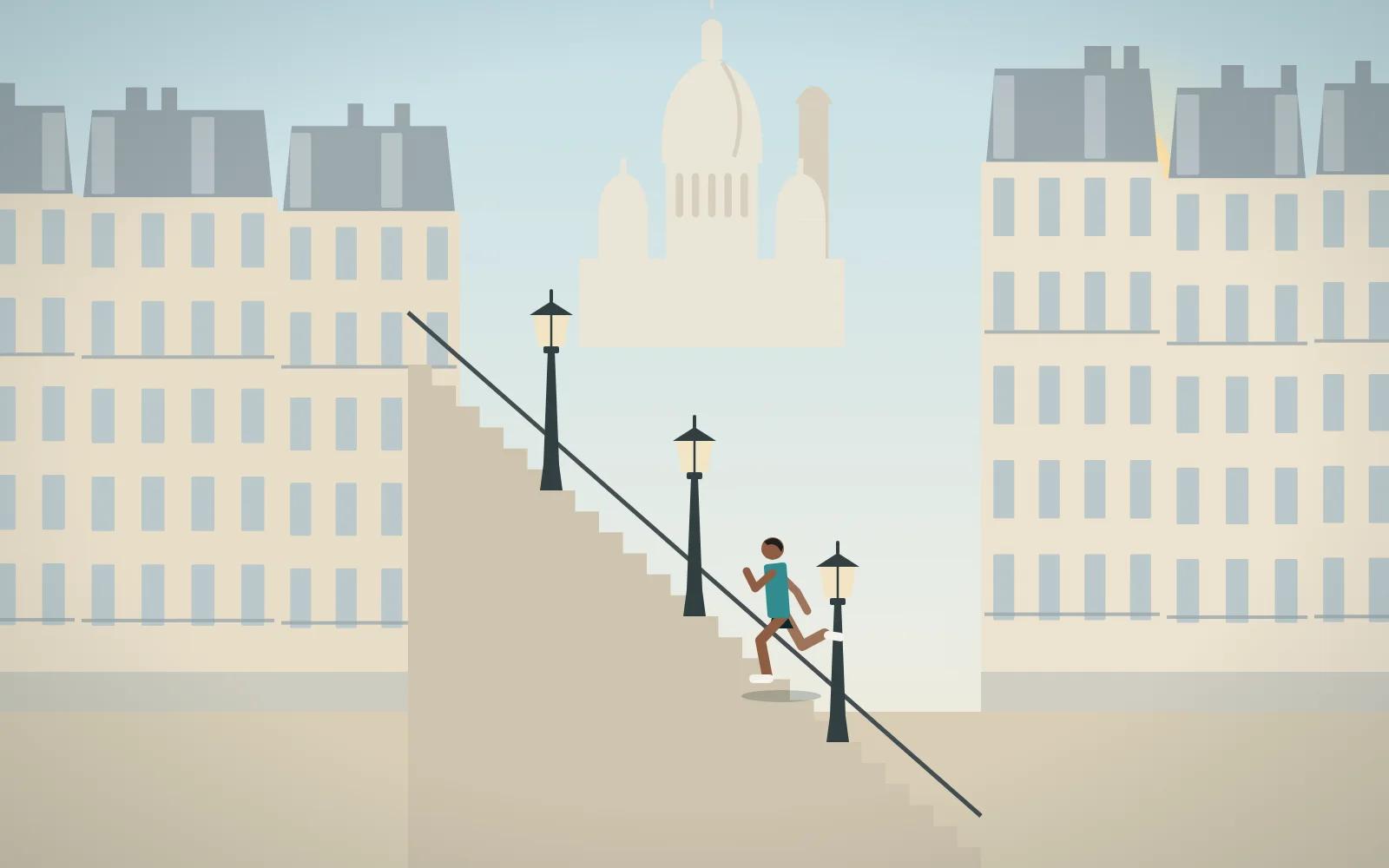
Get rid of the idea that Paris is flat before anything else. The 2026 edition carried 292 metres of climbing and 289 of descent, and it is not spread evenly: it collects in the two woods and in the run of dips and rises under the bridges along the quays, which costs your quads far more than the numbers suggest. The tunnels cannot be reproduced outside race day, but everything else can, and working the hills of the Buttes-Chaumont or Montmartre through the winter is the most direct preparation there is for kilometres 12 to 20.
Six months, and one real question every Sunday
A spring marathon build is an autumn of volume, a winter of quality, and six to eight long runs that decide the result. In Paris the hard part is never finding the time, it is finding where: past fifteen kilometres a badly chosen route turns into a sequence of red lights, one-metre pavements and crossings, and your pace stops meaning anything. The 20 km de Paris on 11 October falls at exactly the right moment for a dress rehearsal, on a course that runs through the Bois de Boulogne as well.
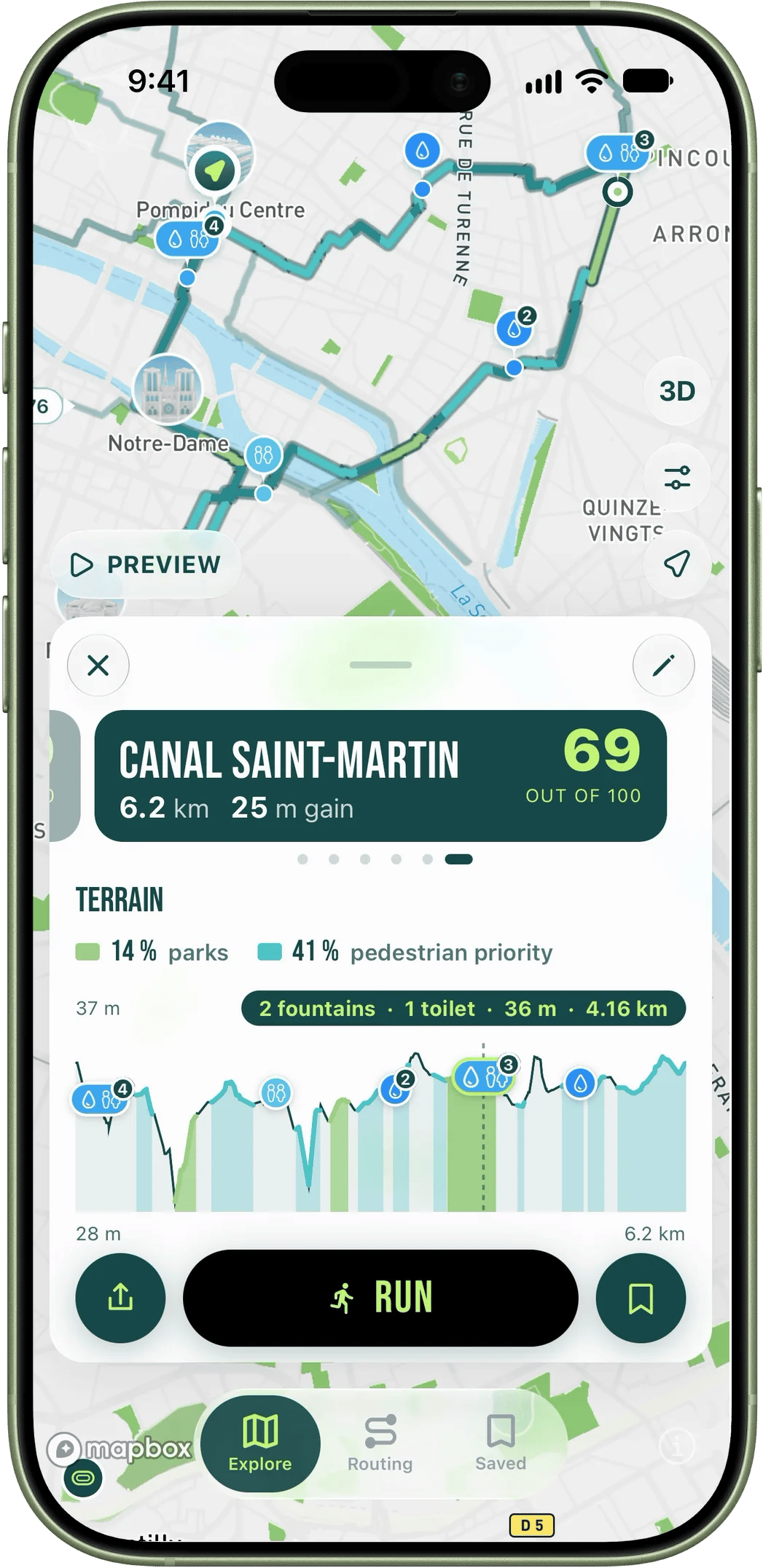
That is precisely what RunninParis computes. Drop your address and a distance, 18, 25 or 32 kilometres, and the app compares several routes scored from the City of Paris open data: pavement width, shade, the share of park and path, how often you stop to cross. You see the elevation profile and the terrain breakdown before you leave, fountains and toilets appear along the route, and the whole thing exports to your watch as GPX.
The ballot will decide whether you are on the line on 4 April. It will not decide what shape you are in when you get there: that is the twenty-six Sundays between the draw and the race, and the first of them does not wait for the result.