Training for the 20 km de Paris: Five Weeks, and a Course That Does Not Forgive
The autumn benchmark runs on 11 October, from the Pont d'Iéna to the Eiffel Tower, and there are just under five weeks left. What you can still build, what you should stop hoping for, and why the Bois de Boulogne is the only training ground that counts.
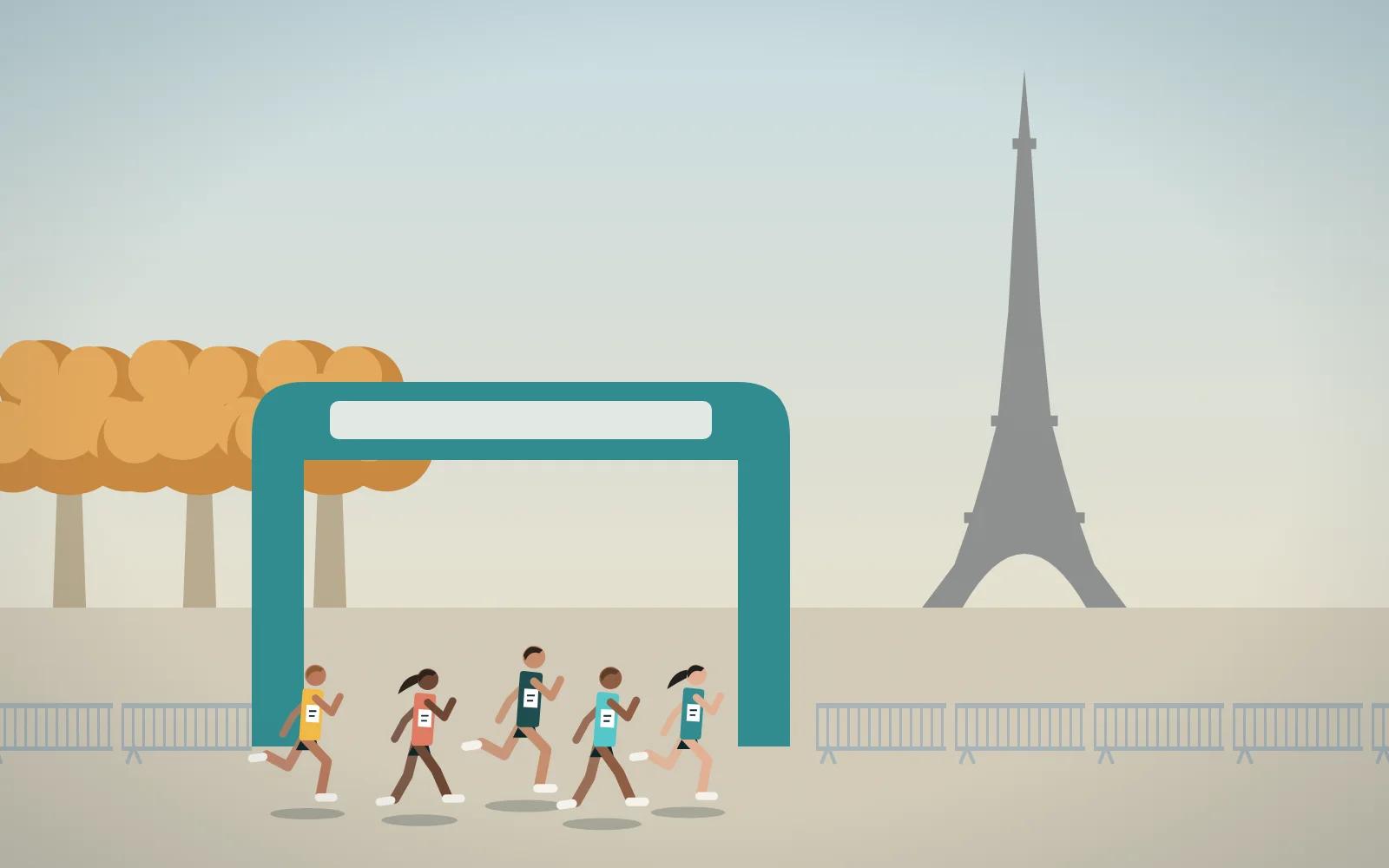
The 20 km de Paris is the autumn race that shapes the second half of the Parisian running year the way the marathon shapes the spring. The 48th edition runs on Sunday 11 October 2026 at 9 a.m., starting on the Pont d'Iéna and finishing at the foot of the Eiffel Tower. There are just under five weeks left, and entries are still open: the first three price tiers have sold out, the fourth sits at 71 euros, and places thin out as the date approaches. Roughly six in ten French runners report failing to get into at least one race because it filled up, so do not count on late September.
The course, and what it asks of you
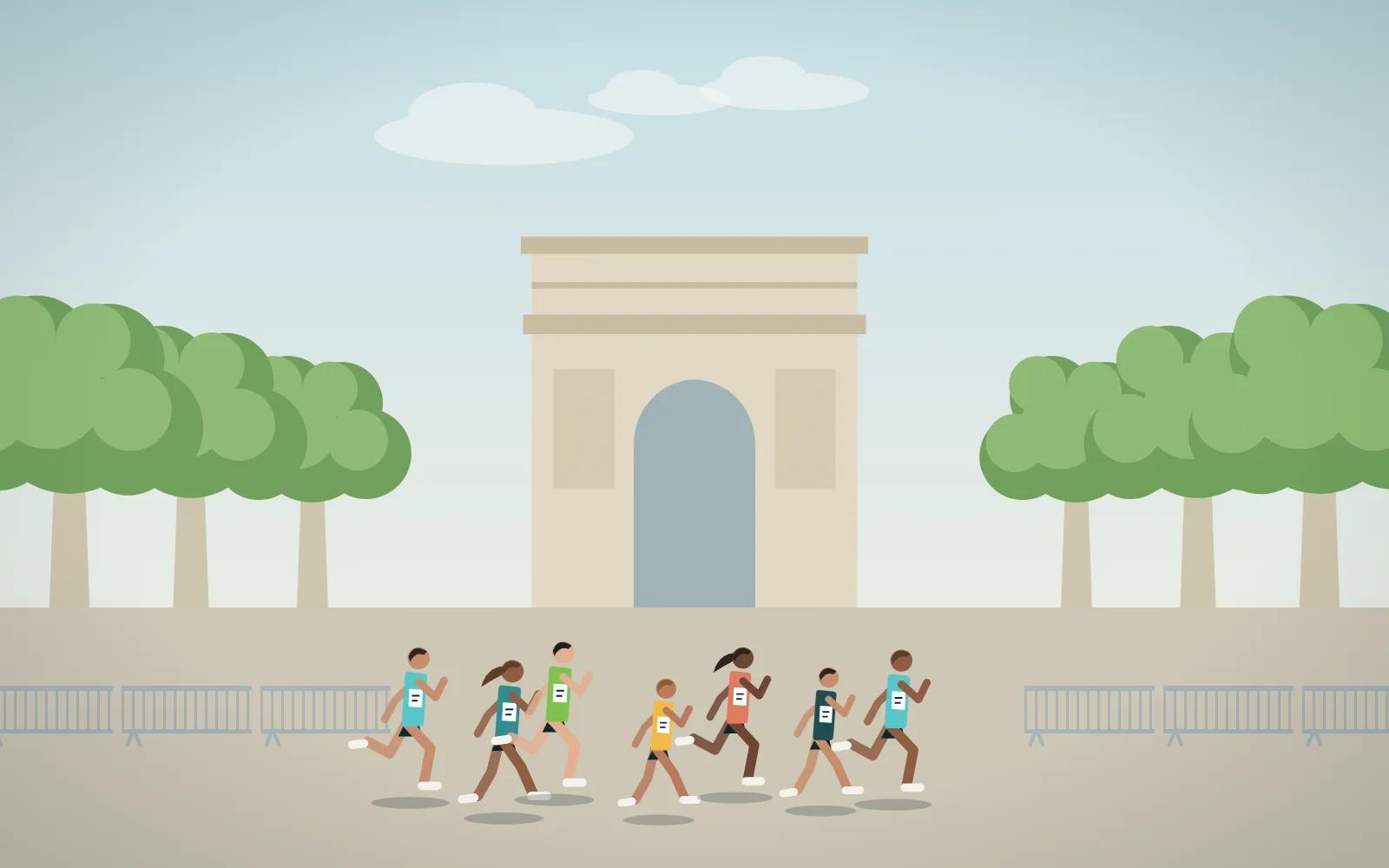
The route leaves the Pont d'Iéna, climbs to the Trocadéro, passes the Arc de Triomphe and takes you into the Bois de Boulogne by way of Roland-Garros, before coming back past the Maison de la Radio and along the quays to the Pont Royal to finish under the tower. On paper it reads as a fast, rolling course, and it is. But rolling is the operative word: this is not a flat race. There is real undulation through the 16th and around the Bois, and there are underpasses and rises along the riverside stretch that arrive late enough in the distance to hurt. Runners who train exclusively on the canals, dead flat and uninterrupted, routinely get a nasty surprise around kilometre fifteen.
The distance itself is the other thing people underestimate. Twenty kilometres is not a long 10K. It is close enough to half-marathon territory that fuelling, pacing discipline and long-run volume all start to matter, but short enough that you can talk yourself into treating it casually. That combination produces the classic 20 km de Paris experience: a comfortable first twelve kilometres and a very long final five.
What five weeks can still change
Say it plainly: five weeks does not build fitness. The aerobic system answers in three months, not in one. What five weeks can do is get you to the line specifically prepared rather than generically fit, and over 20 kilometres that is very nearly the whole difference between a good day and a bad one.
The block comes to four full weeks and a weekend. This week and next are for volume, walking the long run up from fourteen to sixteen kilometres, easy, with no intensity you have to think about. The week of 21 September is the biggest of the block: the long run goes to eighteen kilometres and you add one tempo session at around your goal race pace. The week of 28 September keeps the tempo, the hardest of the five, but the long run drops back to fourteen. The last ten days are a real taper: cut the volume roughly in half, keep a little intensity so you do not go flat, and arrive fresh. A botched taper is the one mistake in this plan that costs you minutes.
One session is still missing, and it is the one with relief in it. A weekly hill run at the Buttes-Chaumont, on Montmartre, or simply on the rolling allées of the Bois is enough to prepare you for the surges through the 16th. This is not about climbing. It is about tolerating a change of pace.
Make your long runs look like the race
The advice worth more than the schedule: run your long sessions in the Bois de Boulogne, on the course's own ground, so your legs learn undulation rather than towpath. It is the easiest thing in the world to arrange and almost nobody does it.
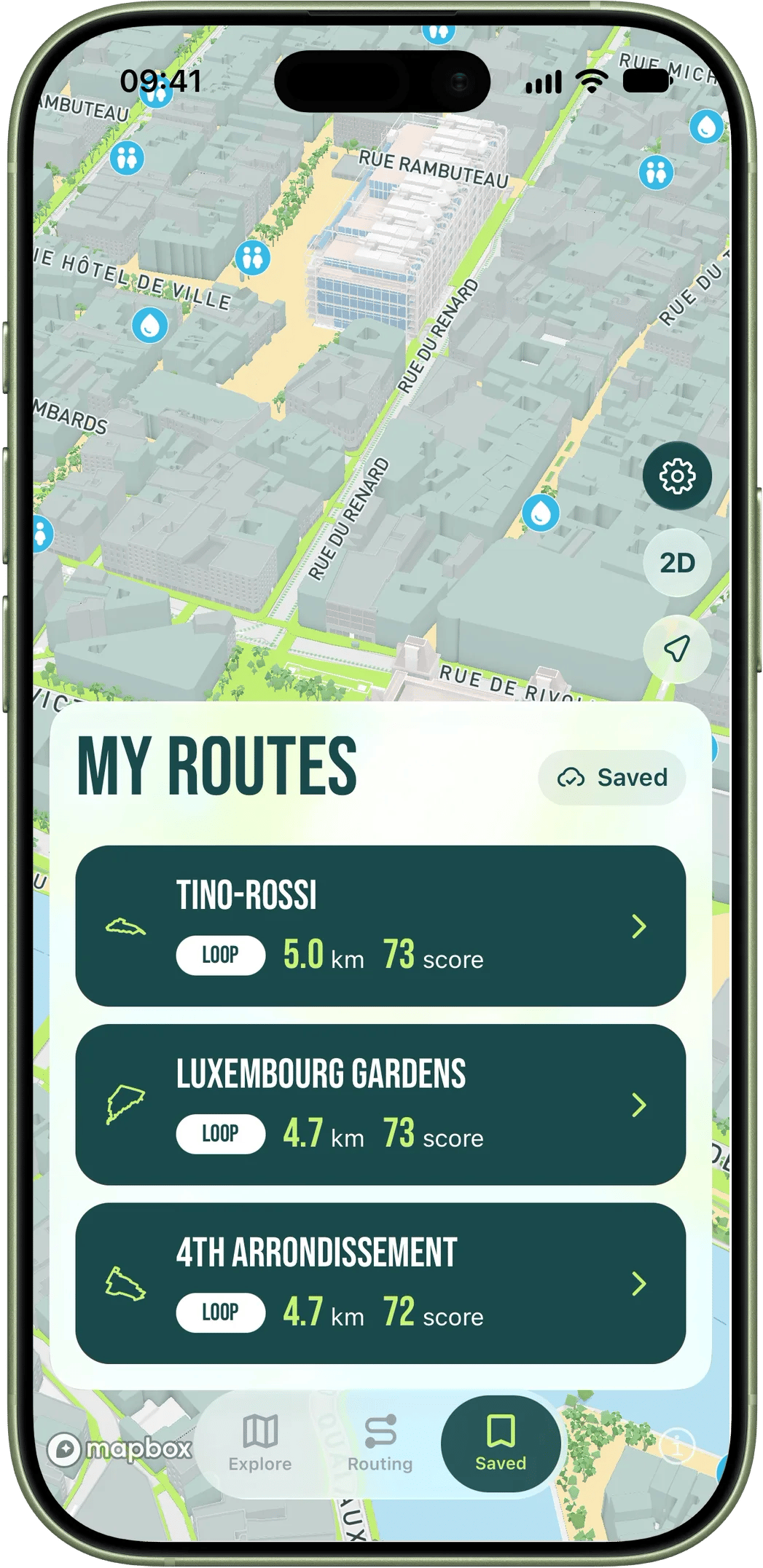
That is exactly what RunninParis is for. Set a start at the Porte Dauphine or the Porte Maillot, ask for eighteen kilometres, and read the elevation profile before you commit: you want a session with some rise in it, not the flattest option available. Save it to your library so you can repeat exactly the same route week to week, which is the only honest way to measure whether you are getting faster, then export the GPX to your watch and stop thinking about navigation.
Five weeks from now the only thing that will matter is whether kilometre sixteen feels familiar. And if the 20 km leaves you wanting more, the 2027 Paris Marathon ballot closes on 30 September, eleven days before the race.
Before race day, the 15 km routes in Paris are the closest training distance, and each one states its climbing.