Running in Paris in Summer: How to Train Smart When It's Hot
June through August in Paris means heat, tourists and changed streets. A practical guide to training through a Paris summer without losing fitness or your mind.
Paris in summer is a different city to run in. Not worse — just different, and the runners who adapt their training to the season come out of August in better shape than those who try to run the same routes at the same times and wonder why every session feels terrible. The structural changes are predictable: the city gets hotter, tourist-dense in ways that block your usual lines, the parks get crowded on weekend afternoons. Against those negatives are real advantages: light until nearly 10 p.m., the Canal de l'Ourcq becomes a distinct running environment, the mornings before 8 a.m. remain excellent right through the season.
The timing shift is non-negotiable
The single most important summer adaptation is running earlier. Not somewhat earlier — definitively earlier. The difference between running at 7 a.m. and 11 a.m. on a day that peaks at 33°C is roughly 8 to 12°C of ambient temperature, plus a full shift from morning shade to midday sun. Paris is a stone city — Haussmann's limestone absorbs heat during the day and radiates it back through the evening. The urban heat island effect runs 2 to 4°C above surrounding suburbs on warm days. The rule is simple: run before 8 a.m. or run after 8 p.m. Everything in between is negotiable only when it is genuinely cool.
The post-9 p.m. window is equally real. Paris in late June and July has light until close to 10 p.m., and by 9 p.m. the stone city has shed enough heat that the quays, the canal and the wider boulevards are fully usable again. The Seine right-bank quay at 9:30 p.m. in July, with the river still and the Eiffel Tower lit to the west, is one of the most genuinely pleasant places to run in Europe. If your schedule prevents morning runs, the late evening is a serious alternative, not a compromise.
Routes that beat the heat
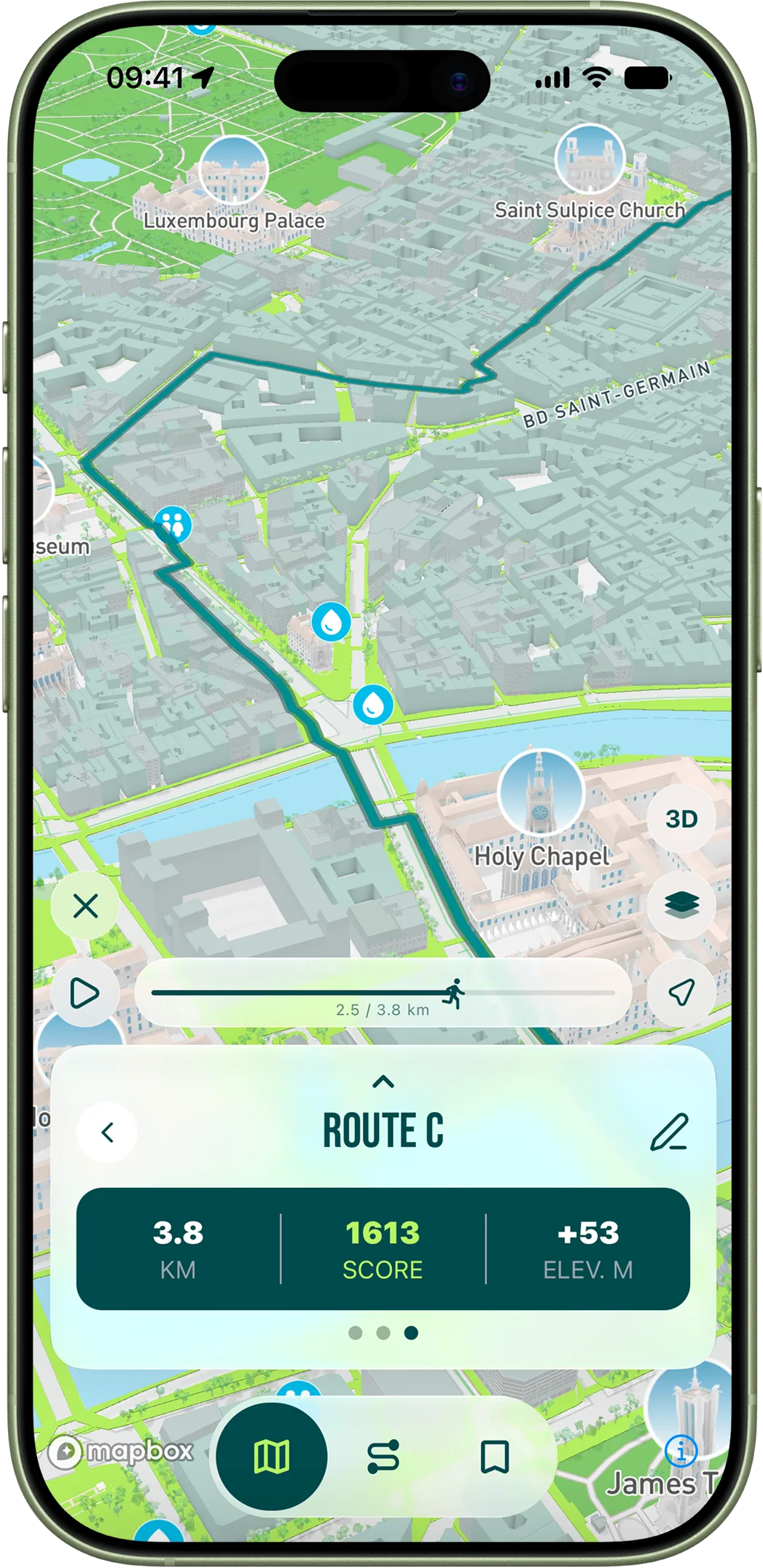
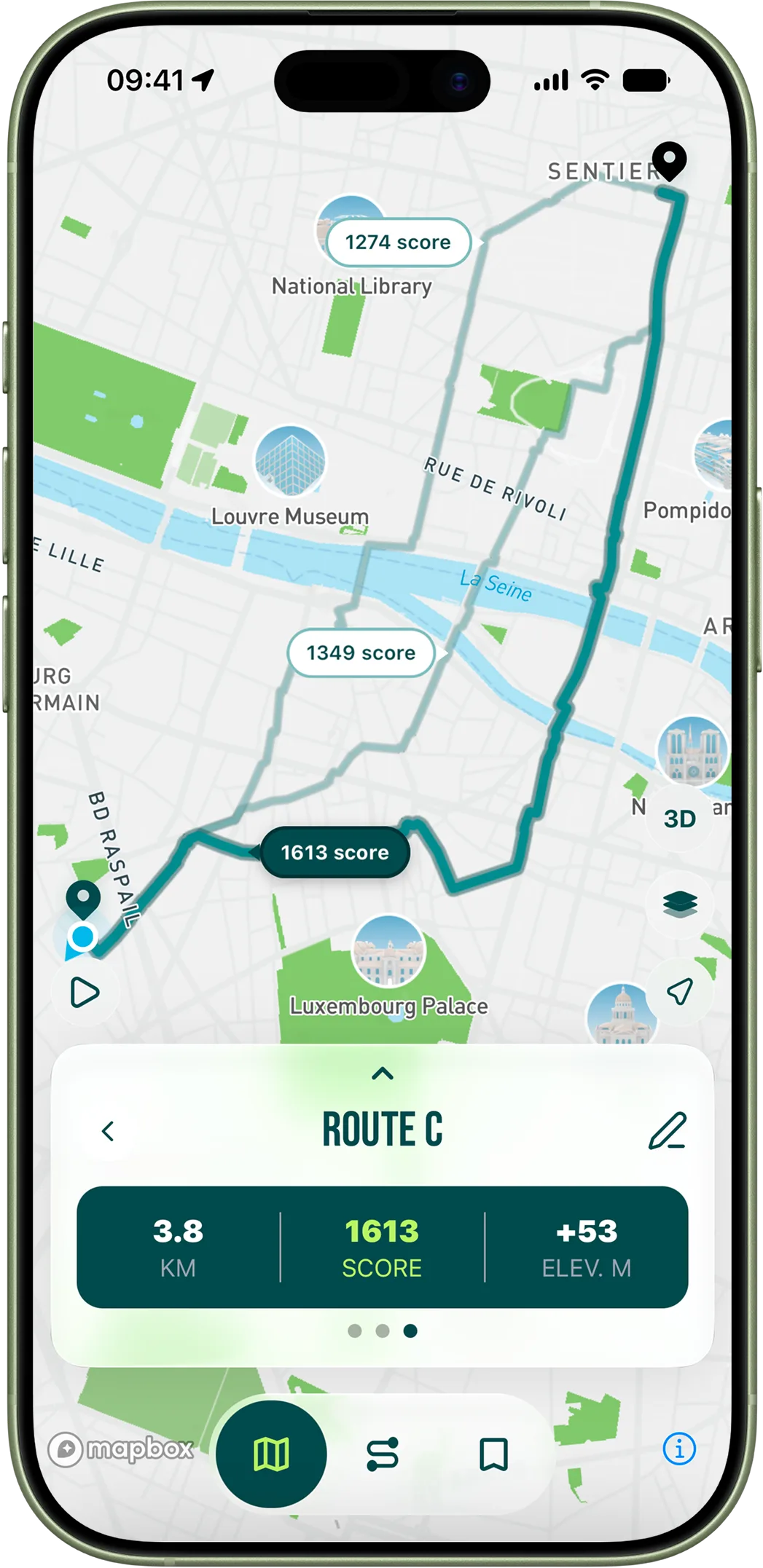
The tree algorithm already knows this. RunninParis weights tree density as a significant score booster, and in summer those trees convert directly into shade. The routes the algorithm generates — which already prioritize parks, tree-lined boulevards and pedestrian corridors — happen to be the best summer routes too. You do not need to manually redesign your training; use the existing scored routes and add one filter: avoid south-facing exposed stretches between 9 a.m. and 7 p.m.
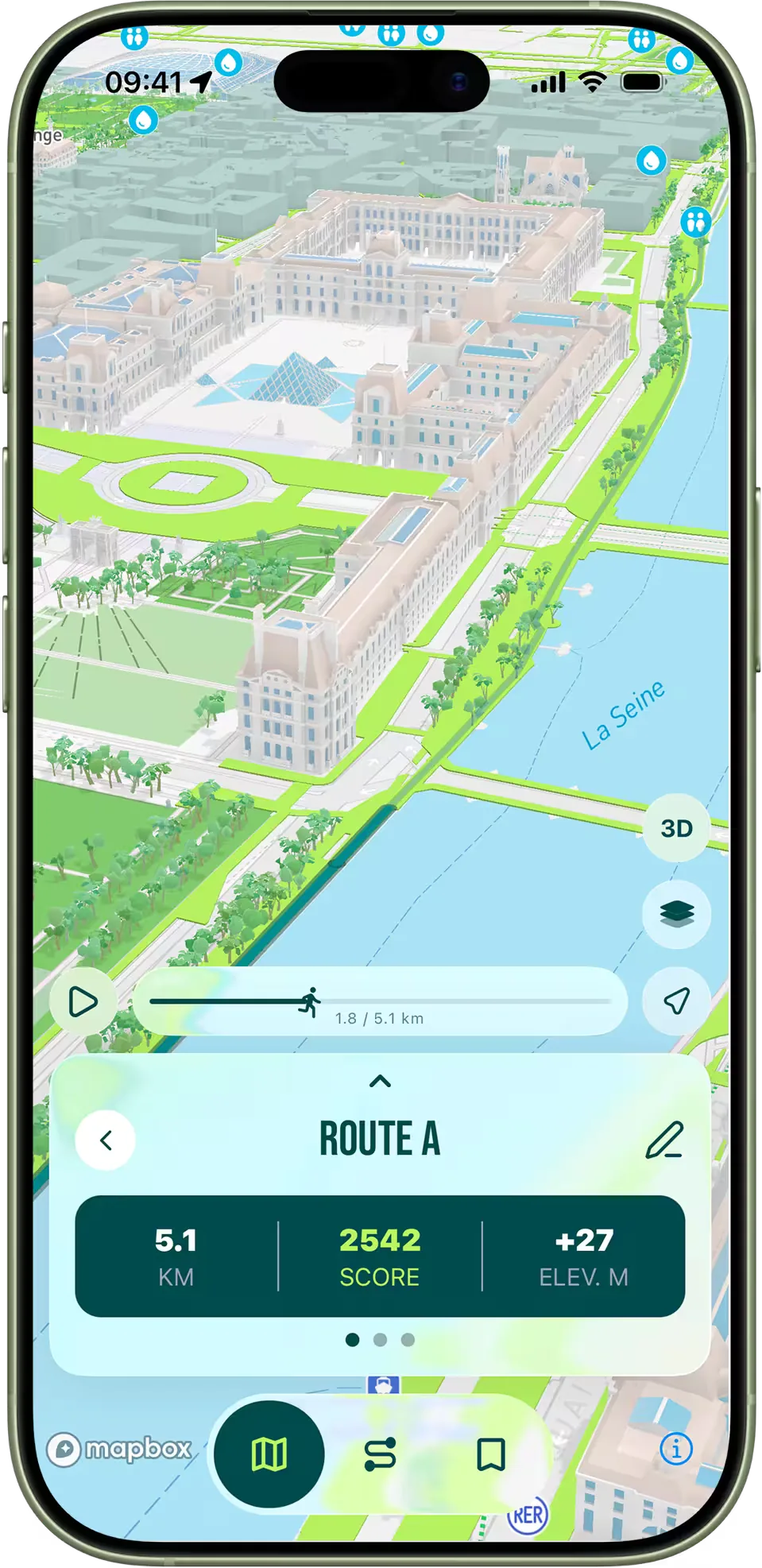
The specific summer-excellent routes: the Canal de l'Ourcq corridor is tree-lined on both banks and benefits from the water's thermal corridor, typically running 2 to 3°C cooler than surrounding streets. The Bois de Vincennes and Bois de Boulogne have enough canopy to reduce effective temperature by 4 to 6°C compared with open boulevards, and the dirt and gravel paths reduce surface heat radiation. The Promenade Plantée, elevated above street level, catches more breeze than any ground-level route. The Parc des Buttes-Chaumont has deep shade in its ravines that keeps morning sessions genuinely cool even in a heatwave. On the left bank, the Berges de Seine shaded sections near the Musée d'Orsay run noticeably cooler than the more exposed sections toward Austerlitz — plan your summer route to lean on the former.
Water strategy and the fountain network
Paris has approximately 1,200 public drinking fountains spread across the city. They are on the RunninParis map, toggled on by default. In summer they go from a convenience to a planning input. Any run over forty-five minutes in July or August should pass at least one fountain. Any run over seventy-five minutes should be planned to pass two. Generate your route, check the fountain layer, and if no fountain appears within the first four kilometres, adjust slightly. The fountains on the Seine quays are among the most reliable — maintained more consistently than park fountains. The Parc de la Villette has the highest concentration of working fountains of any single Paris park.
What to do about August
August in Paris is genuinely unusual. Roughly a quarter of the city's population leaves in the first two weeks, and the city centre fills with tourists. Weekday mornings in August, particularly after the 15th, are among the quietest you will encounter all year — quieter even than January. The Luxembourg at 6:30 a.m. in the second week of August is something between a private park and a film set. If you are still in Paris and willing to be up before 7 a.m., the city is yours.
The one genuine August hazard is canicule — the heatwave events Paris now experiences most summers. When Météo-France issues a Vigilance Orange or Rouge for heat, the threshold for outdoor exertion genuinely changes. Above 38°C ambient with high humidity, the cost of an hour of running is a health issue, not a performance one. On those days: run before 7 a.m. only, cut distance by a third, walk the uphills, and treat the run as a recovery jog. The fitness loss from one or two easy weeks in a heatwave is negligible; the risk of heat illness is not.