Early Morning Running in Paris: How to Make It a Habit That Sticks
Paris before 7 a.m. is a different city: empty boulevards, golden light, no tourists. A practical playbook for actually becoming a morning runner here.
Paris before 7 a.m. is a different city. The boulevards are yours. The light is golden in summer, blue and crisp in winter. The Métro is starting up but the streets are not yet awake — café terraces are being set up by sleepy waiters but no one is sitting in them, the boulangeries are firing their ovens, the garbage trucks are doing their pass and are already gone. For a runner, the window between roughly 5:30 a.m. and 7:00 a.m. is the only time of day when the city is functionally a running track. The avenues you avoid in the evening because of the volume of people are completely empty. The boulevards you cannot reasonably hold pace on between 6 p.m. and 8 p.m. become smooth corridors with no decision-making. The Seine quays, which can feel crowded on a Saturday afternoon in May, are populated by nobody but other runners. The trick is becoming someone who actually uses this window. Most people who try fail within ten days, and they fail for predictable reasons. The point of this guide is to make you the exception.
The pattern is the same whether you live in Paris or anywhere else, but Paris is unusually well-suited to morning running, and the local logistics deserve their own playbook. What follows is what we have figured out, applied to ourselves, recommended to people who asked us how to start, and watched succeed. There is nothing especially clever in any single piece of advice below. The cleverness is in doing all of it at once and not skipping the boring parts.
Pick a four-kilometre route, not a ten
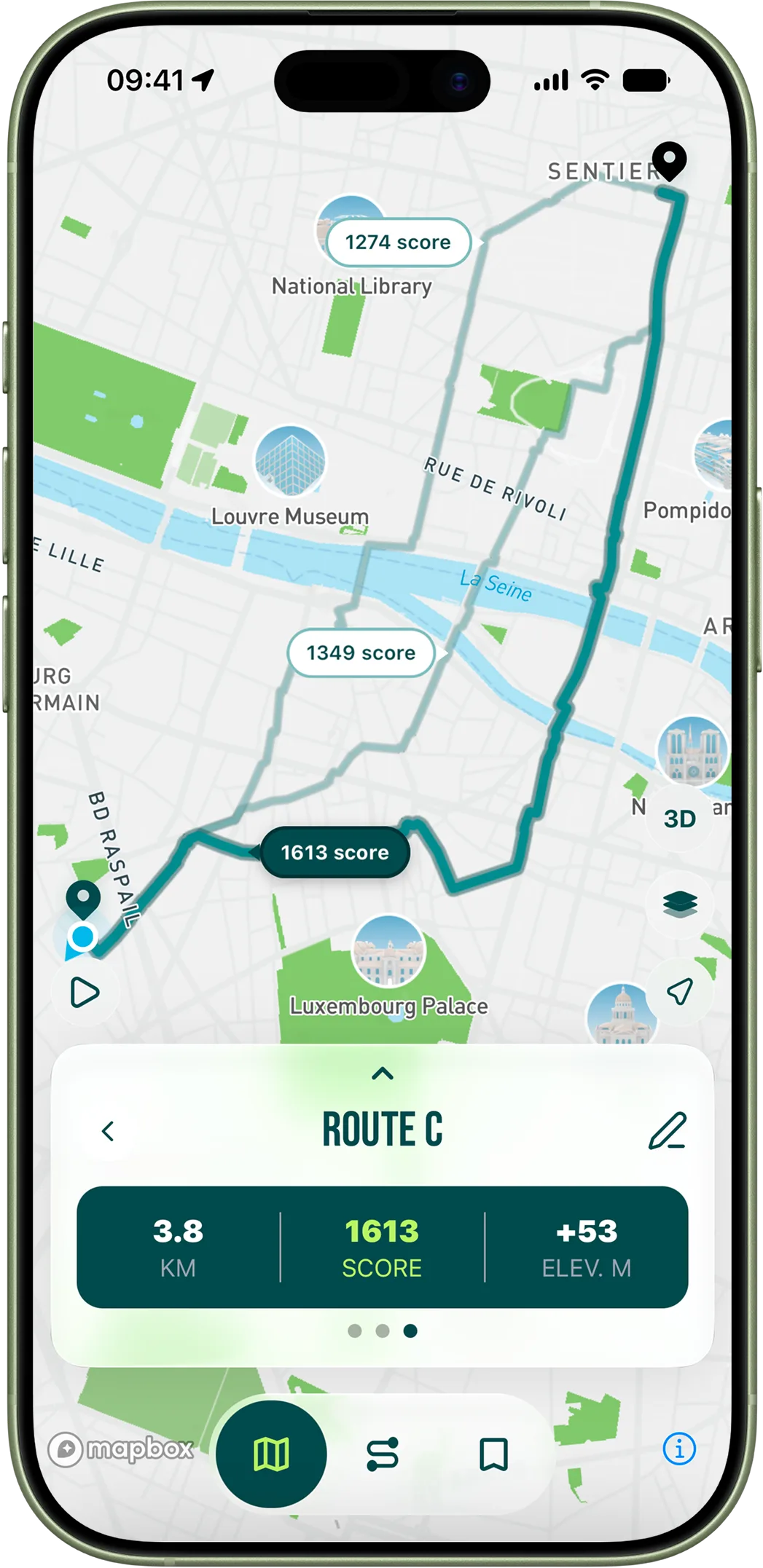
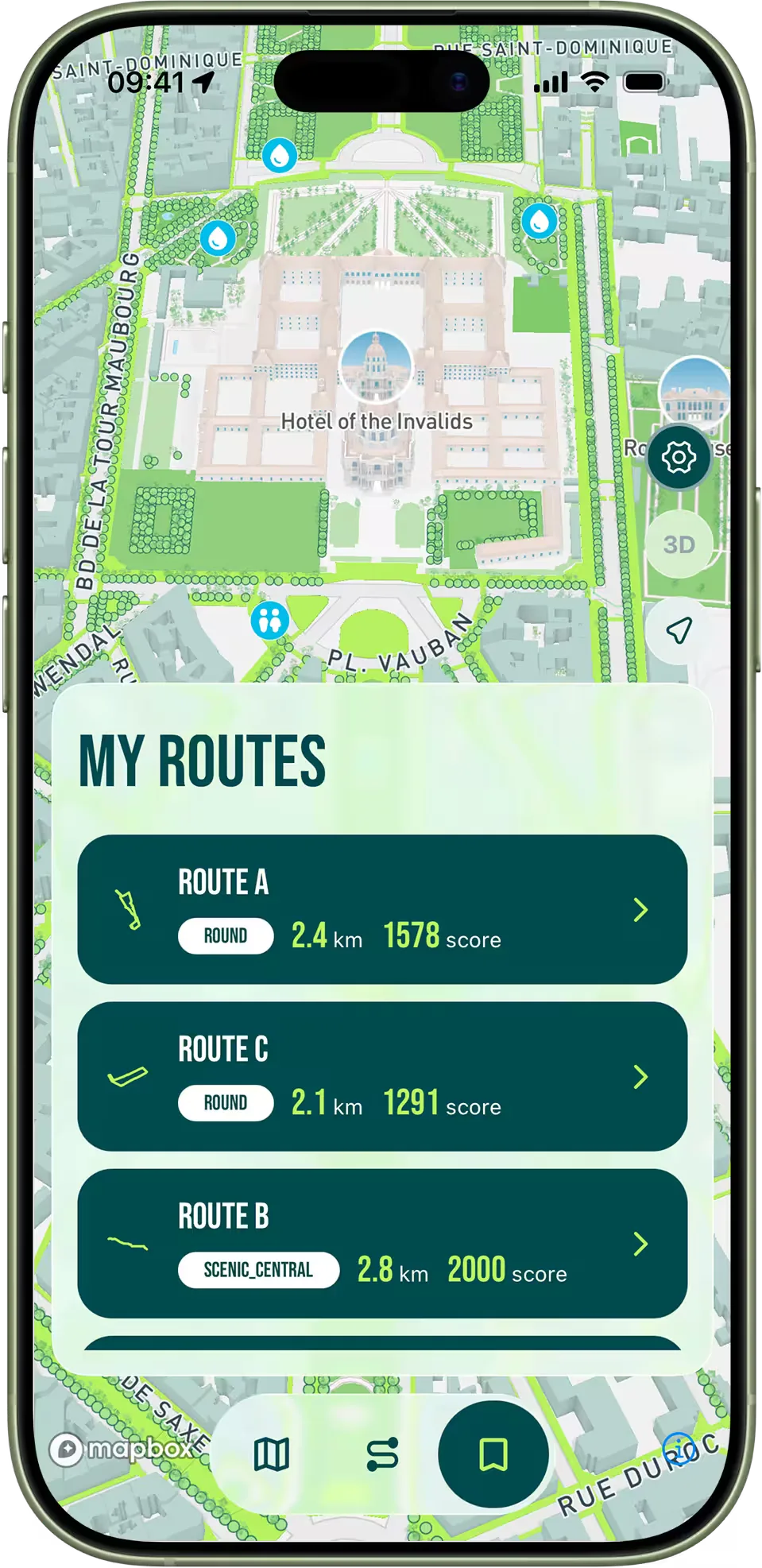
The single most common mistake new morning runners make is being ambitious about distance. Morning ambition is high — you imagine yourself running ten kilometres along the Seine at sunrise, photogenic, glowing. Morning execution is fragile. The version of you who climbed out of bed at 5:45 a.m. has a different relationship to effort than the version who planned the run at 9 p.m. the night before. A ten-kilometre dawn run feels great when imagined, but the first three kilometres make it real, and the gap between the planning self and the executing self is where the habit collapses. A four-kilometre loop you already know cold — same streets, same bridges, same coffee at the end — becomes a habit because the friction of starting is near zero and the friction of finishing is non-existent. After three months of four-kilometre morning runs five days a week, you are running twenty kilometres a week at low effort, which is more than the average person who attempts ten-kilometre dawn runs and burns out in three weeks. Save two or three short routes in your library and rotate them. Boredom is the wrong worry. Consistency is the right one.
The second mistake is variety. New runners assume the route should change frequently to stay interesting. Experienced morning runners do the opposite: they cycle through two or three routes for weeks, sometimes months, because the cognitive cost of choosing a new route is exactly the friction that derails the habit. Your morning brain does not want to decide. Give it nothing to decide. The chosen route in the library, the cued playlist, the bottle of water in the fridge, the laid-out gear next to the bed — every decision pre-made the night before makes the morning version of you function on autopilot, which is what you want.
The default routes by neighbourhood
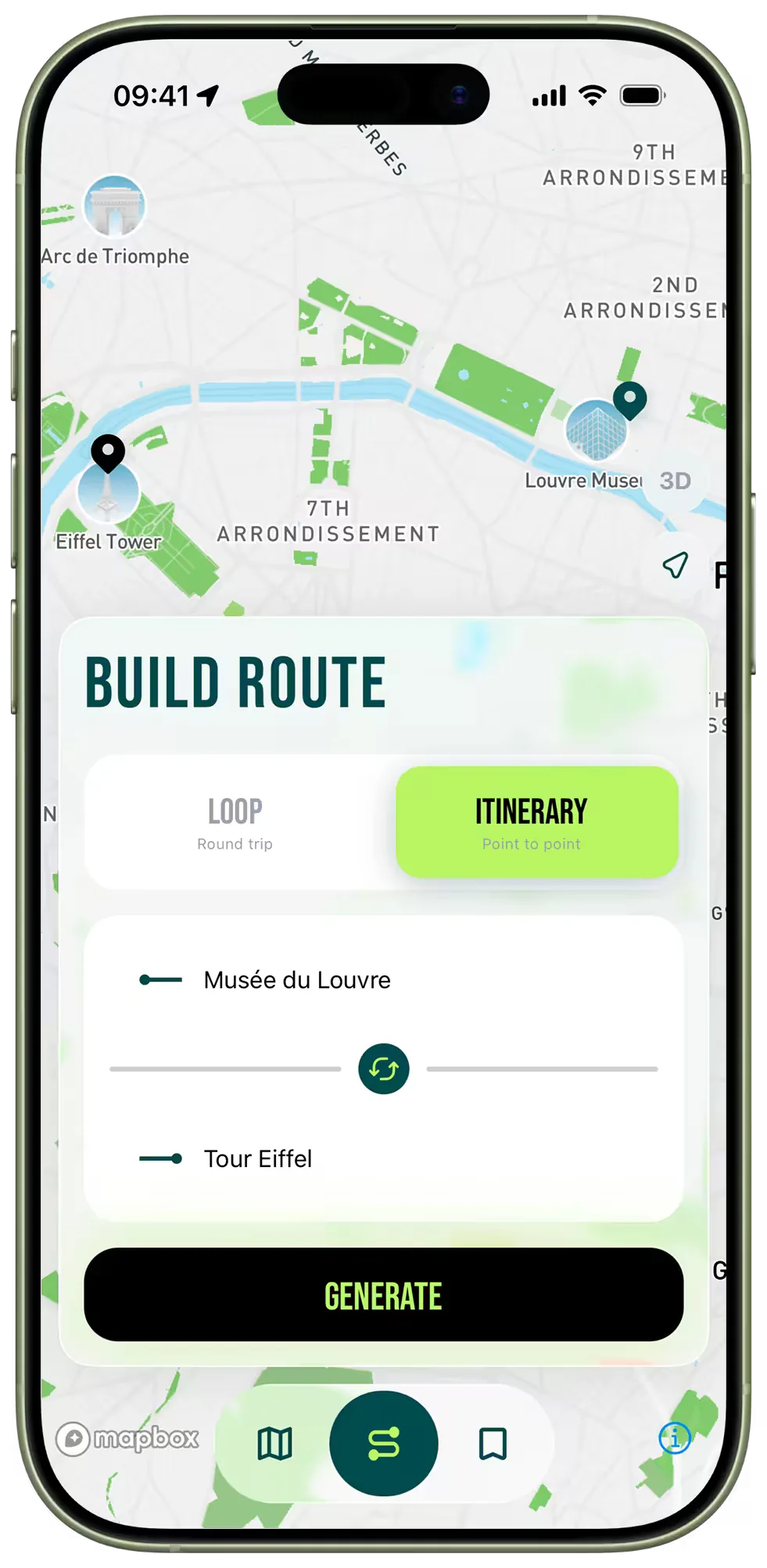
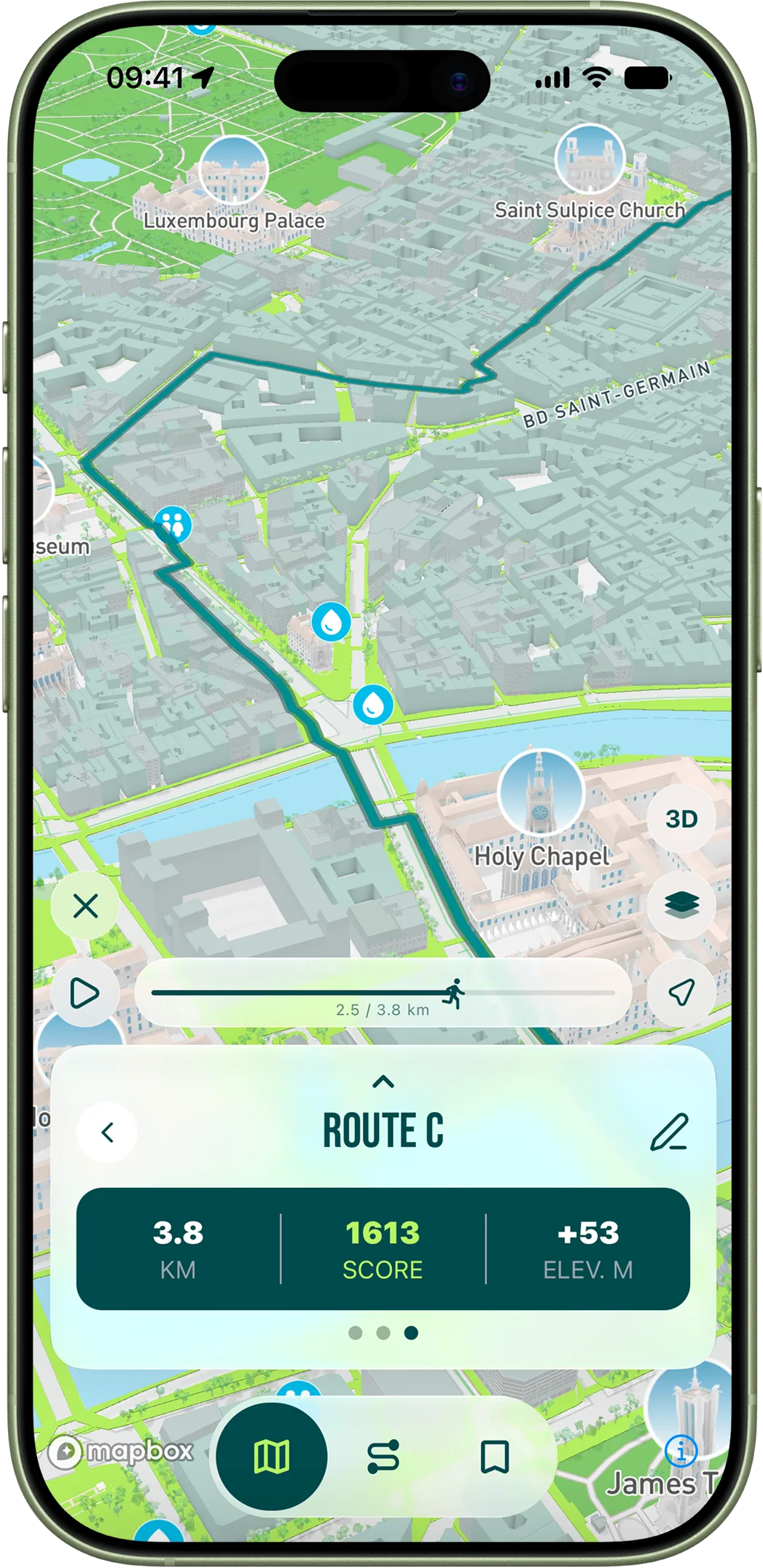
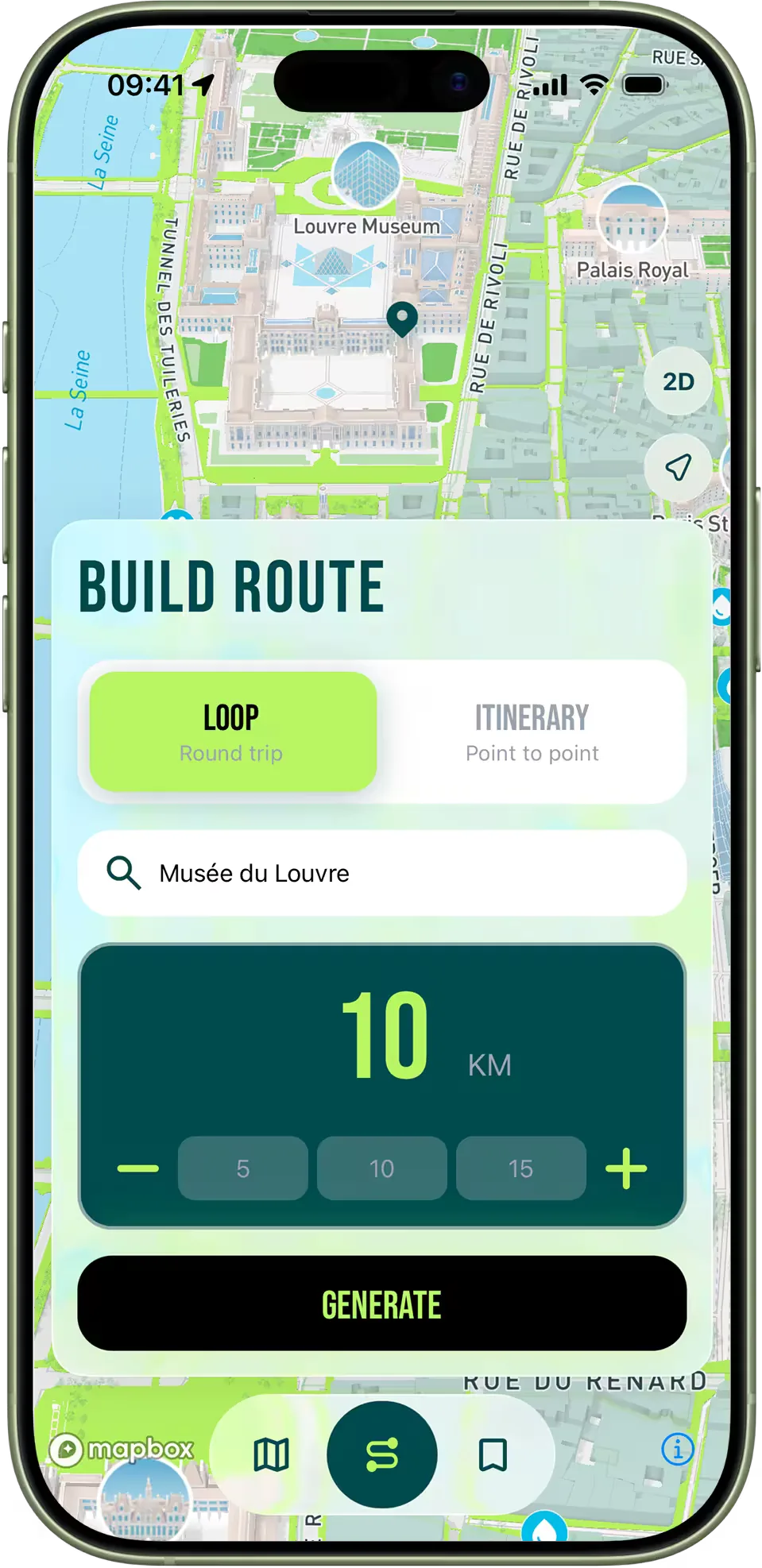
The river is the best default for almost everyone. Both quays are lit through the dark months, the surface is uniformly smooth, the foot traffic is near zero before 8 a.m., and once you are on the quay the route makes itself. From the Marais, an east-bound loop along the right bank to the Bassin de l'Arsenal and back is about five kilometres flat. From Saint-Germain or the 7th, a west-bound loop along the left bank to the Pont Alexandre III and back is about four kilometres. From Montmartre or the 9th, drop down to the Bassin de la Villette and run the Canal de l'Ourcq for as long as you want then turn back. From Bastille, the Promenade Plantée east toward the Bois de Vincennes — almost entirely car-free, the safest dawn route in the city. From Montparnasse or the 14th, run south on the avenue de l'Observatoire to the Parc Montsouris and loop the park once it opens (the perimeter sidewalks are runnable before opening). Save the route you settle on as your default starting point in the app. The friction of opening the app and picking a route is friction. Eliminate it.
The neighbourhoods we recommend avoiding at dawn are the medieval core — the Marais west of the rue Vieille-du-Temple, the Latin Quarter east of the Pont de Sully, the rue Mouffetard area, and the streets behind the Sorbonne. They are beautiful and safe but the sidewalks are too narrow for serious pace, the cobble is uneven enough that you should not run it tired, and there is nothing about them that pays you back for the friction of running there. Save them for daytime exploration runs when you have more bandwidth.
What to actually do, the night before and that morning
Lay everything out the night before. Shoes by the door. Running clothes folded on top of the shoes. Watch on the charger, GPX cued. Water bottle in the fridge. Coffee scoop next to the kettle. Phone charging across the room from the bed so you have to physically get up to turn off the alarm. None of this is optional. The single biggest predictor of whether you will run in the morning is how many decisions remain to be made between waking and starting; reduce that number to as close to zero as possible. The version of you at 5:45 a.m. is not the decision-maker. The version of you at 9:30 p.m. last night is. Stack the deck in your own favour.
In the morning itself: do not check your phone before you leave. The single act of opening messages or social media drops you out of the cleared-mind state that makes the run easy and into the connected-to-everyone state that makes it hard. The run is a thirty-minute interval in which the world does not exist; the only way to preserve that interval is to not invite the world in before you start. Open the app, hit the saved route, go. Hydration: a sip of water, not a glass. Eating: nothing for a run under forty-five minutes; a small banana or a single piece of bread for anything longer. Light: from November through February you will start in full dark and the city will be in nautical twilight for the first kilometre. Stick to the well-lit grands boulevards, the Seine quays and the canal corridors. Reflective gear is enough; no headlamp is needed if you stay on lit streets, and the streets we recommended above are all lit.
The compounding effect, which is the actual point
Morning runs work because they are functionally impossible to defer. The 6:30 a.m. run cannot slide to the afternoon, because by the afternoon you have run out of will. The 5 p.m. run can always slide to the 6 p.m. run can always slide to tomorrow. The asymmetry is the entire reason morning runners run more than evening runners on average, even when the evening runners are theoretically more motivated. Once you are out the door at 6:30 a.m. the run is happening. There is no negotiation left to have. By 7:15 a.m. you have done the hardest thing on your calendar, and everything else for the next sixteen hours is downhill.
Pair the run with a fixed positive aftermath. Same café, same order, same bench. The bakery on the way back. The shower-and-coffee sequence in the same order. Within two weeks the entire loop becomes automatic and you will start resenting the days you miss it. Within two months you will not recognize the version of yourself that thought 6:30 a.m. was early. Within six months your weekly volume will be high enough that you can race a half-marathon comfortably, and you will not remember a moment in the build-up that felt hard. That is what the morning compound does. The cleverness of the running app, the route, the watch, the gear — all of it — is in service of that compounding. None of it works without consistency, and consistency is impossible to deliberately summon. You can only set up the conditions in which it becomes the path of least resistance, and that is what the early-morning routine does.