Running in Paris in August: The Month the City Belongs to You
Parisians leave, the delivery vans stop, the terraces empty out. For a runner, August is the best window of the year — as long as you move the clock.
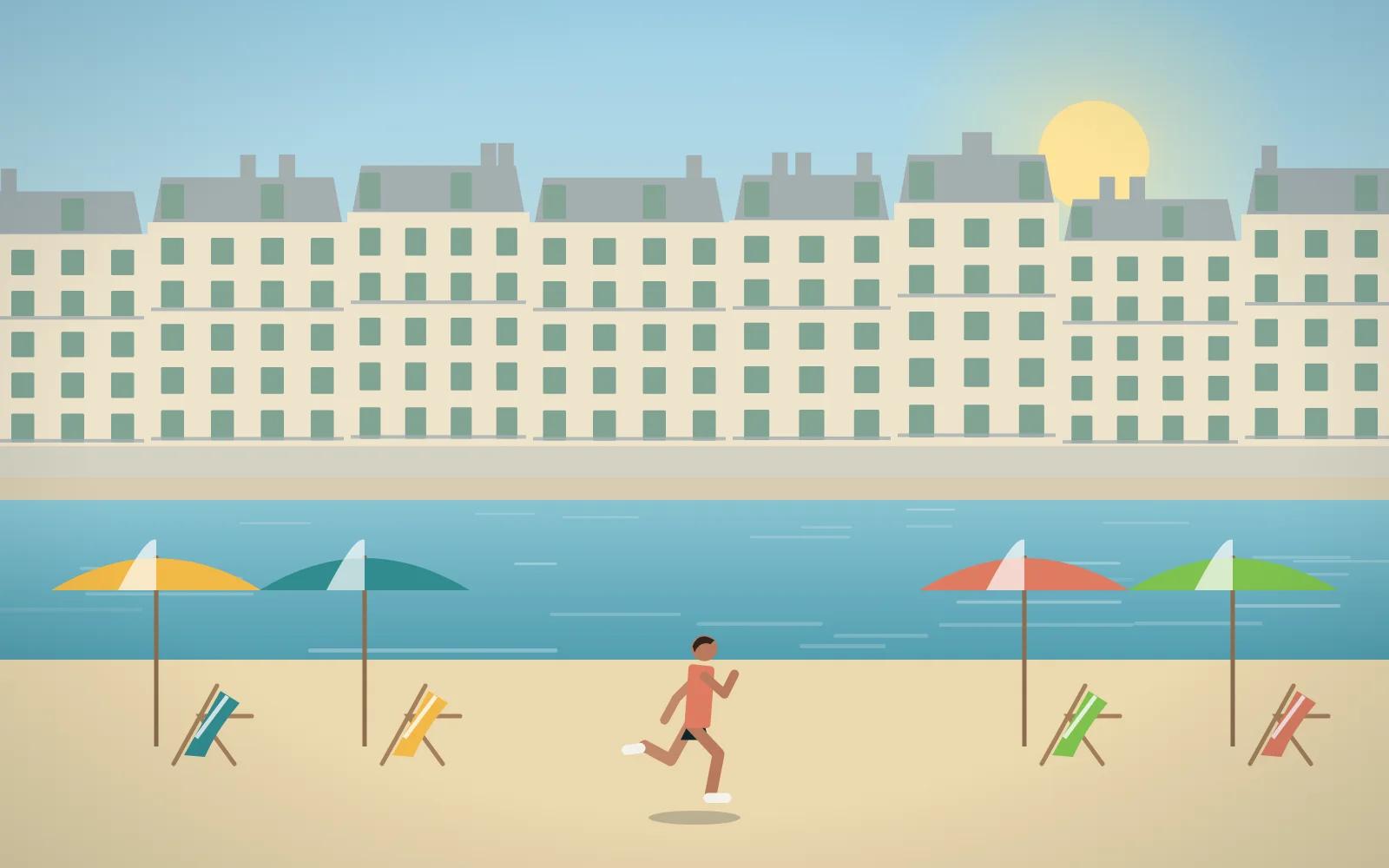
Every August, Paris does something no other capital quite manages: it empties. Not entirely, and not evenly — the tourist core stays busy — but enough that the residential city changes character completely. The delivery vans that clog the narrow streets of the 2nd and the 9th eleven months a year are gone. The queues at the bakery are shorter. The traffic on the boulevards thins to something you can hear across. And for a runner, this matters more than it does for anyone else, because the single biggest constraint on running in Paris is not distance or terrain — it is the density of other people and vehicles occupying the same two metres of pavement you want.
What actually changes
The honest summary is that August temporarily turns bad running neighbourhoods into good ones. The 1st, 2nd, 8th and 9th arrondissements — the grid of narrow pavements and constant obstruction that we normally tell people to avoid at street level — become genuinely runnable. The Marais, unbearable on a Saturday in June, is quiet at eight in the morning in August. Le Sentier, the rue Montorgueil area, the streets around the Grands Boulevards: these are all worth running exactly once a year, and this is the month. If you have lived here a while and only ever run the river and the canals, August is your chance to discover that the middle of your own city has streets in it.
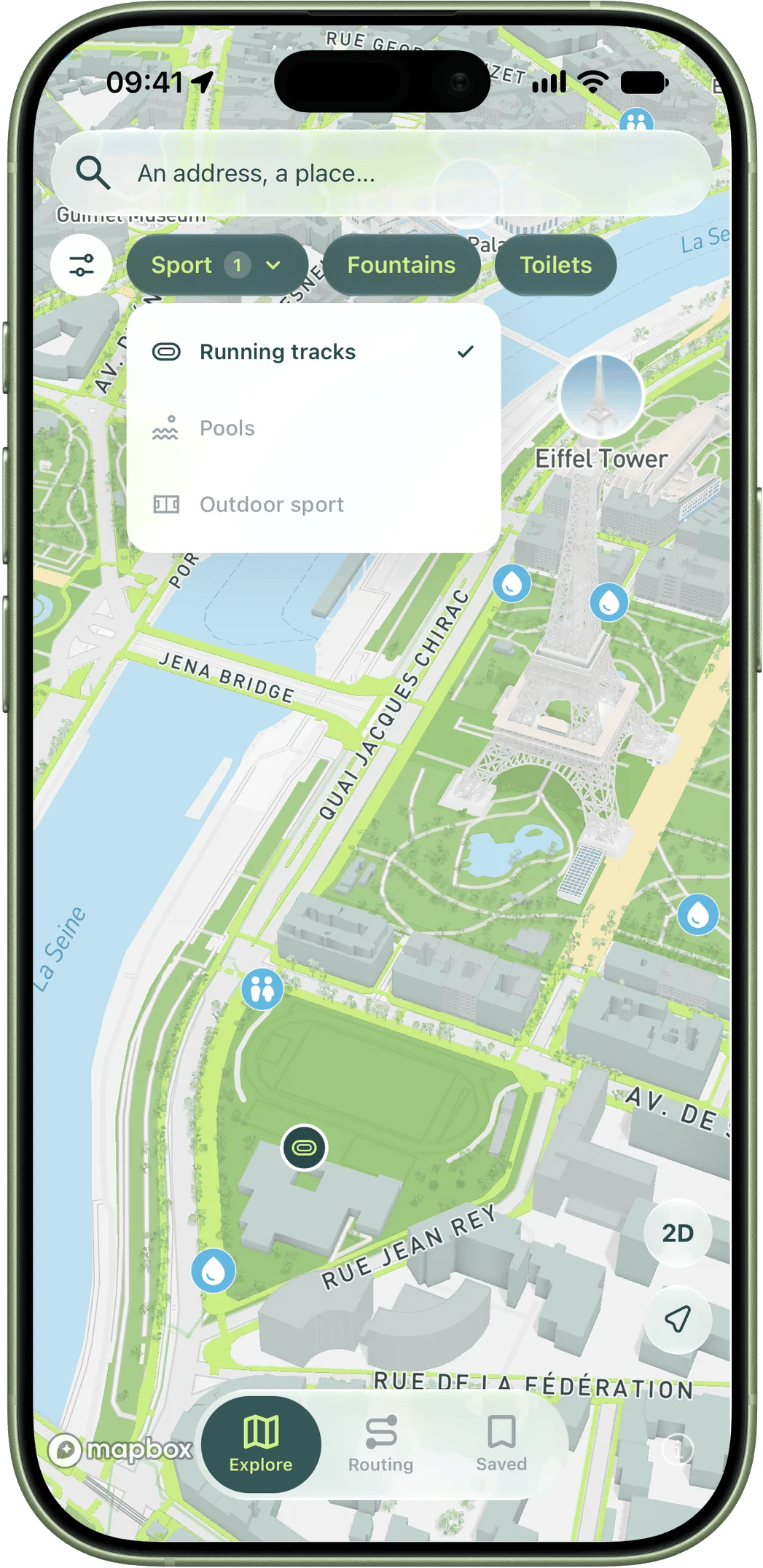
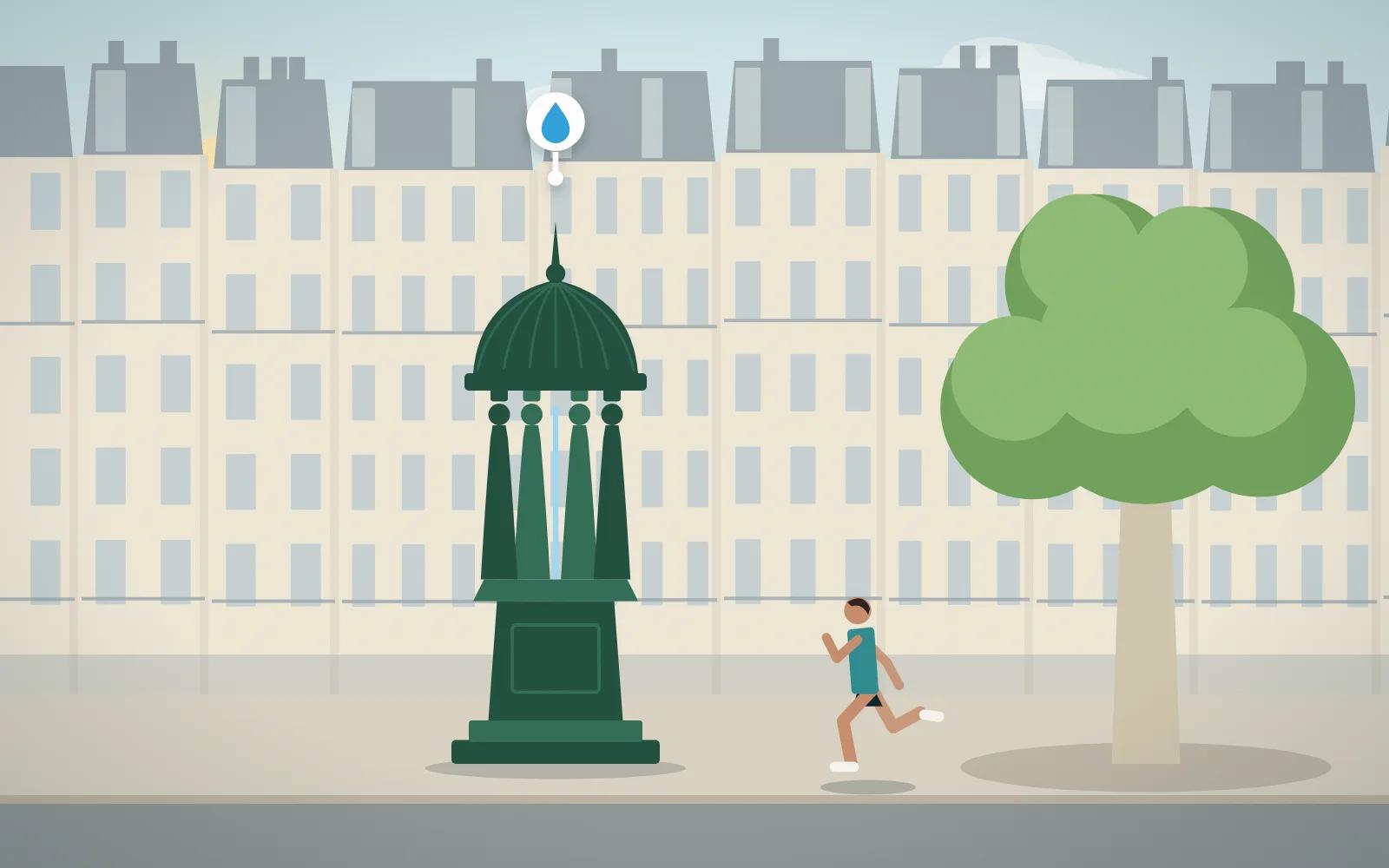
There is a counterweight, and it is worth knowing before you plan around it: Paris Plages occupies the Parc Rives de Seine and the Bassin de la Villette through July and August, which means the two flagship car-free corridors — the exact places you would normally send a summer runner — become deckchairs, sand and crowds during the day. The river is still yours early in the morning. From late morning onward it belongs to everybody else. Some businesses and a number of neighbourhood cafés also close for the month, so the water fountain you rely on matters more than the café you were going to stop at.
The hour matters more than the route
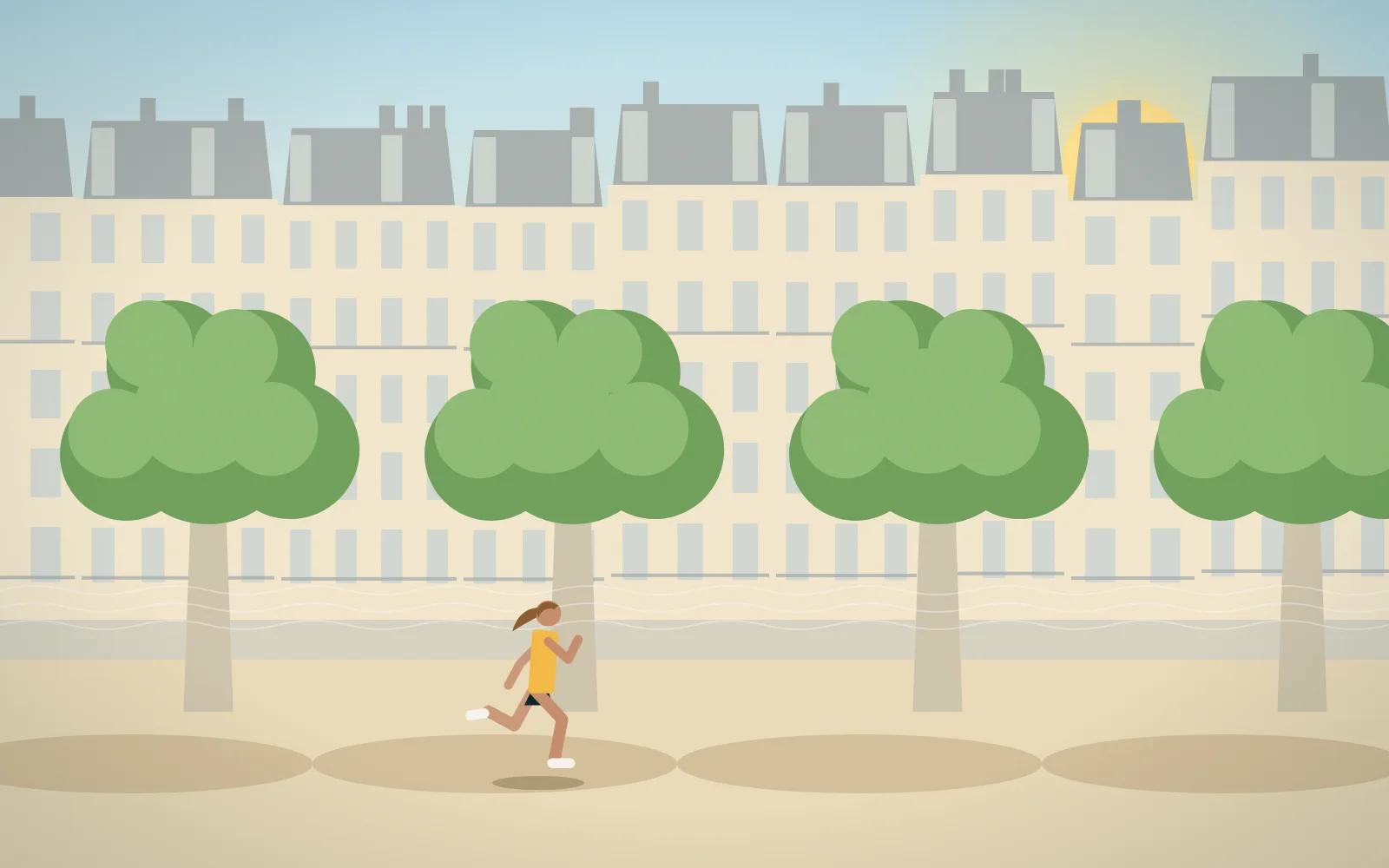
August heat is the real constraint, and it is not the same problem as July heat, because the city holds it. Paris stone and asphalt release warmth well into the evening, so a 7 p.m. run in mid-August can be hotter than a 2 p.m. run in May. The two windows that work are before eight in the morning and after nine at night, and of the two, morning is dramatically better: the air is cooler, the pollution levels are lower, and the empty August streets are at their most striking at six thirty with the light coming up the Rue de Rivoli and nobody on it.
This is also the month when the app's scoring is most worth ignoring, and we say that as the people who built it. The engine scores routes on sidewalk width, crossings, pedestrian zones and green cover, calibrated for a normal Parisian week — and in August, the crossings are empty and the narrow streets are clear, so the ordinary penalties overstate the pain. Set your address, ask for your distance, and then deliberately look at the routes ranked second and third rather than first. Those are usually the ones through the middle of the city that we would talk you out of in October. For four weeks a year, they are the best runs in Paris.